The Country That Teaches You to Slow Down
Japan does not reveal itself to the photographer who rushes. It reveals itself to the one who arrives at the Fushimi Inari shrine at 5:30 AM and finds the torii gates empty, red paint glowing in pre-dawn light while ten thousand tourists sleep in their hotels. It reveals itself to the one who spends three days at a single onsen in the Japanese Alps, waiting for the morning mist to lift from Kamikochi Valley in exactly the right way. It reveals itself to the one who kneels beside a frozen Hokkaido marsh at minus twenty degrees, watching a red-crowned crane dance against a backdrop of steam rising from thermal springs.
Japan is the most photographed country in Asia and arguably the most difficult to photograph well. Every iconic composition has been captured millions of times. The cherry blossom tunnel, the torii gate in the lake, Fuji reflected at dawn. To make images that transcend the postcard requires understanding something most visiting photographers miss: Japan is not one destination. It is four seasons, four main islands, and dozens of micro-regions, each with its own rhythm, its own optimal timing, and its own visual language.
This guide is built from repeated visits across all four seasons. It covers what to photograph, when to be there, and how to navigate a country where logistical precision makes the difference between extraordinary images and tourist snapshots.
Planning Around Japan’s Photography Seasons
Japan’s latitude span, stretching from subtropical Okinawa at 26 degrees N to subarctic Hokkaido at 45 degrees N, creates a seasonal diversity that few countries can match. The same month that produces cherry blossoms in Kyoto delivers the last heavy snows in Hokkaido. Understanding this seasonal cascade is the foundation of any successful photography trip.
The Four Photography Seasons
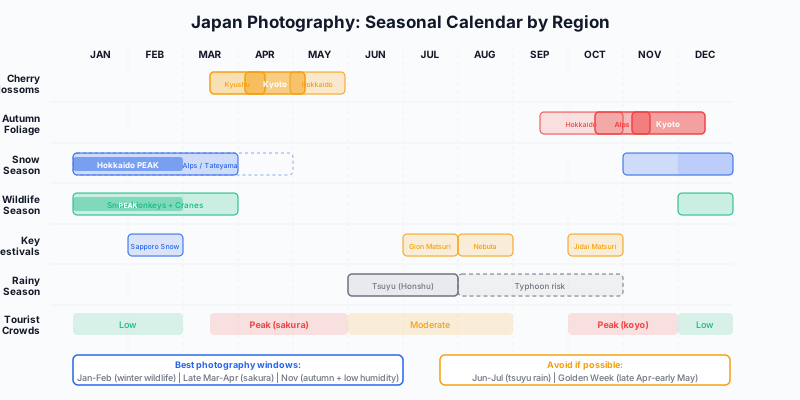
Winter (December through February): Hokkaido transforms into a frozen landscape of volcanic steam, snow-covered birch forests, and some of the most compelling wildlife photography on Earth. The Japanese Alps accumulate massive snowpack, and the Tateyama Snow Corridor reaches depths of 20 meters by March. Kyoto’s bamboo groves and temples are blissfully empty. This is the season most visiting photographers overlook, and it is arguably the strongest.
Spring (Late March through May): Cherry blossom season dominates, and for good reason. The sakura front moves north from Kyushu to Hokkaido over approximately six weeks, creating a moving wave of photographic opportunity. But spring also brings the clearest views of Mount Fuji and the first access to alpine trails.
Summer (June through August): The rainy season (tsuyu) blankets Honshu from June through mid-July, and it is worth embracing rather than avoiding. Rain-slicked temple stones, mist-shrouded bamboo, and the saturated greens of Japanese gardens photograph exceptionally well in wet conditions. August brings festival season, including the Nebuta in Aomori and Awa Odori in Tokushima.
Autumn (September through November): The koyo autumn foliage season rivals cherry blossoms in photographic potential and surpasses it in tonal complexity. While cherry blossoms offer white and pink against green, autumn delivers a palette spanning yellow, orange, crimson, and burgundy. The foliage front moves south from Hokkaido through November, reaching Kyoto in mid-to-late November.
When to Go: The Honest Assessment
| Season |
Photography Value |
Crowd Level |
Weather Reliability |
Best For |
| Jan-Feb |
Excellent |
Low |
Good (cold, clear) |
Hokkaido wildlife, snow landscapes |
| Late Mar-Apr |
Excellent |
Very high |
Variable |
Cherry blossoms, Mt Fuji |
| May |
Good |
Moderate |
Good |
Alps opening, fresh greens |
| Jun-Jul |
Good (with rain) |
Moderate |
Poor (tsuyu) |
Atmospheric temple shots, gardens |
| Aug |
Fair |
Moderate |
Hot, humid |
Festivals, fireworks |
| Sep-Oct |
Good |
Moderate |
Variable (typhoons) |
Early autumn, Hokkaido foliage |
| Nov |
Excellent |
High |
Good |
Kyoto autumn foliage |
| Dec |
Very good |
Low |
Good (cold) |
Winter onset, illuminations |
The two peak windows are late March through mid-April for cherry blossoms and mid-November for Kyoto autumn color. Both attract massive crowds that require strategy to work around. The best-kept secret is January through February, when Hokkaido delivers world-class wildlife and landscape photography with almost no competition.
Kyoto: Temples, Gardens, and Cherry Blossom Strategy
Kyoto is the spiritual heart of Japanese photography, home to over 2,000 temples and shrines, seventeen UNESCO World Heritage sites, and gardens that represent centuries of refined aesthetic practice. It is also, during cherry blossom and autumn foliage season, crushingly crowded.
The Dawn Protocol
Every serious Kyoto photographer follows the same rule: be at your location before dawn. Not at dawn. Before dawn. The difference between arriving at Fushimi Inari at 5:15 AM and 6:30 AM is the difference between photographing empty torii gates in perfect directional light and fighting for space with early-bird tour groups.
Locations that reward pre-dawn arrival:
- Fushimi Inari (34.XX°N, 135.XX°E🔒): The endless vermillion torii gates are empty before 6 AM. Walk past the main approach to find quieter sections deeper in the complex.
- Kinkaku-ji (35.XX°N, 135.XX°E🔒): Opens at 9 AM, but the lake in front offers reflections from the public path before opening. The best reflection occurs in still morning air before wind picks up.
- Arashiyama Bamboo Grove (35.XX°N, 135.XX°E🔒): By 9 AM in peak season, this narrow path becomes impassable. At 6 AM, you can work compositions with natural light filtering through the bamboo canopy without a single person in frame.
Cherry Blossom Timing
Cherry blossoms in Kyoto typically reach full bloom (mankai) between March 25 and April 5, but the date varies by up to two weeks year to year. Monitor the Japan Meteorological Corporation’s sakura forecast, updated daily from January, and build flexibility into your travel dates.
The critical window is three days. From first bloom to petal fall is approximately ten days, but the period of full, pristine blossoms, before wind and rain begin scattering petals, is roughly three to five days. Missing this window by even two days means photographing sparse or falling blossoms rather than the full canopy.
Top Kyoto cherry blossom locations:
| Location |
GPS |
Character |
Crowd Level |
| Philosopher’s Path |
35.XX°N, 135.XX°E🔒 |
Canal-side tunnel of blossoms |
Very high |
| Maruyama Park |
35.XX°N, 135.XX°E🔒 |
Weeping cherry (illuminated at night) |
Extreme |
| Daigo-ji Temple |
34.XX°N, 135.XX°E🔒 |
800 cherry trees, pagoda compositions |
High |
| Haradani-en Garden |
35.XX°N, 135.XX°E🔒 |
Private garden, 400 trees, lesser known |
Moderate |
| Keage Incline |
35.XX°N, 135.XX°E🔒 |
Former railway track lined with blossoms |
High |
Autumn Foliage in Kyoto
Kyoto’s autumn color peaks between November 15 and November 30 in most years. The maple trees (momiji) surrounding temples produce reds so saturated they challenge your camera’s color accuracy.
The underrated locations:
- Tofuku-ji (34.XX°N, 135.XX°E🔒): The Tsutenkyo Bridge view across a valley of maples is the defining Kyoto autumn image. Arrive at opening (8:30 AM) and go directly to the bridge.
- Eikando (35.XX°N, 135.XX°E🔒): Famous for its night illumination (light-up), which runs nightly from mid-November. The illuminated maples reflected in the temple pond produce images of extraordinary intensity.
- Kitano Tenmangu (35.XX°N, 135.XX°E🔒): A shrine with a large maple garden that receives far less attention than it deserves. The garden’s momiji corridor is world-class.
Temple Photography Etiquette
Japan demands more photographic restraint than most destinations. Tripods are prohibited inside virtually all temples and many shrine grounds. Flash is forbidden in most interiors. Video restrictions vary by location. Some temples prohibit photography of specific rooms or objects entirely. Signs are usually in Japanese only, so watch what other visitors are doing.
David duChemin’s principle from Within the Frame applies perfectly here: the most respectful photographs are also usually the strongest, because they require you to observe before shooting.
The Japanese Alps: Kamikochi, Tateyama, and Snow Corridors
The Northern Alps of central Honshu offer mountain landscapes that rival the European Alps in grandeur, with a distinctly Japanese character: hot spring steam rising through snow-covered forests, ancient wooden lodges perched on ridgelines, and a scale of vertical relief that is immediately dramatic.
Kamikochi Valley
GPS: 36.XX°N, 137.XX°E🔒 | Season: Late April through November (closed in winter) | Access: Bus only (no private vehicles)
Kamikochi is a high-altitude valley at 1,500 meters, framed by peaks exceeding 3,000 meters. The Azusa River runs clear through the valley floor, reflecting the surrounding peaks when conditions are calm.
The key shots:
- Kappa Bridge at dawn: The iconic viewpoint of Hotaka peaks reflected in the Azusa River. Arrive before the first bus brings day-trippers (approximately 7:30 AM). Stay overnight at the Kamikochi Imperial Hotel or nearby lodges.
- Myojin Pond: A 30-minute walk from Kappa Bridge. The pond reflects Myojin-dake in still morning conditions. The surrounding forest saturates with autumn color in October.
- Taisho Pond: At the valley entrance, this shallow pond creates mirror reflections of Yake-dake, an active volcano that occasionally steams. Dawn light hitting the volcanic steam is extraordinary when it occurs.
Seasonal timing:
- Late April: Snow-dusted peaks above fresh spring green
- Late June to July: Alpine wildflowers, misty conditions
- Mid-October: Peak autumn foliage in the valley (earlier than Kyoto by three to four weeks)
Tateyama Kurobe Alpine Route
GPS: 36.XX°N, 137.XX°E🔒 | Season: Mid-April through November
The Tateyama route crosses the Northern Alps at approximately 2,450 meters via a series of cable cars, buses, and a trolleybus. The highlight for photographers is the Yuki-no-Otani Snow Corridor, where the road is carved through snowdrifts reaching 15 to 20 meters high, typically peaking in late April through May.
The snow corridor creates surreal geometric compositions: perfectly vertical walls of packed snow forming a white canyon, with a narrow strip of blue sky visible overhead. Use a wide-angle lens (14-24mm) pointed upward to capture the full height, including a walking figure for scale.
Mount Fuji Compositions from the Alps
The western approach to the Japanese Alps offers distant views of Mount Fuji on clear winter mornings. From certain ridgelines above Takayama and along the Shin-Hotaka ropeway, Fuji appears as a solitary cone floating above a sea of clouds. These views require exceptional atmospheric clarity, which occurs most frequently from November through February on mornings following cold fronts.
Hokkaido: Red-Crowned Cranes, Snow Monkeys, and Winter Landscapes
Hokkaido in winter is Japan’s greatest photographic secret. While most visitors flock to cherry blossoms or autumn foliage, Hokkaido between December and February offers wildlife photography that ranks among the finest anywhere on Earth.
Red-Crowned Cranes
GPS: 43.XX°N, 144.XX°E🔒 (Tsurui-Ito Tancho Crane Sanctuary) | Season: November through March | Peak: January through February
The tancho, Japan’s red-crowned crane, is one of the rarest and most elegant birds on the planet. Approximately 1,800 survive in the wild, concentrated in the Kushiro Marshlands of eastern Hokkaido. In winter, they gather at feeding stations where photographers can work from established hides at close range.
The signature shot: Two cranes performing their courtship dance in a cloud of steam rising from warm springs, backlit by low winter sun, with frost-covered trees in the background. This scene occurs regularly at the Tsurui sanctuary on sub-zero mornings.
Camera settings for crane photography:
| Situation |
Aperture |
Shutter |
ISO |
Notes |
| Dancing cranes |
f/5.6-f/8 |
1/1600+ |
400-800 |
Freeze wing movement |
| Cranes in flight |
f/8 |
1/2000+ |
800-1600 |
Track with continuous AF |
| Cranes in steam |
f/4-f/5.6 |
1/800 |
400-800 |
Backlight for steam glow |
| Cranes at rest |
f/5.6 |
1/500 |
200-400 |
Sharp details, red crown |
A 200-600mm or 100-400mm telephoto zoom covers the range you need. Bring a monopod rather than a tripod for flexibility in the hides.
Snow Monkeys (Japanese Macaques)
GPS: 36.XX°N, 138.XX°E🔒 (Jigokudani Monkey Park, Nagano Prefecture) | Season: December through March
Technically in Honshu rather than Hokkaido, the Jigokudani snow monkeys are often paired with a Hokkaido winter itinerary. The macaques bathe in a natural hot spring while snow falls around them, creating one of the most iconic wildlife photography scenes in the world.
Field notes:
- The 30-minute walk to the monkey park is on a snowy forest trail. Yaktrax or crampon attachments for your boots are essential.
- The monkeys are habituated to photographers and largely ignore cameras. Use a 70-200mm f/2.8 for tight portraits in the steam.
- Overcast days produce the most pleasing images. Direct sun creates harsh contrast between bright snow and dark wet fur.
- The steam rising from the hot spring catches backlight beautifully in early morning and late afternoon.
Hokkaido Winter Landscapes
Beyond wildlife, Hokkaido’s winter landscape is otherworldly:
- Biei Blue Pond (43.XX°N, 142.XX°E🔒): A man-made pond where dead trees stand in naturally blue water, the vivid color caused by colloidal aluminum hydroxide particles from the nearby Shirogane Hot Springs. In winter, the pond freezes and is illuminated at night, creating a surreal blue-white scene.
- Lake Mashu (43.XX°N, 144.XX°E🔒): One of the clearest lakes in the world. In winter, the caldera rim freezes into ice formations while the lake remains open, producing atmospheric mist.
- Drift Ice on the Sea of Okhotsk (44.XX°N, 144.XX°E🔒): From late January through March, pack ice drifts to the Hokkaido coast near Abashiri and Utoro. Sightseeing boats and coastal walks provide access. The ice creates abstract patterns extending to the horizon.
Tokyo After Dark: Urban Night Photography Techniques
Tokyo at night is a different city from Tokyo by day. The neon canyons of Shinjuku, the crossing chaos of Shibuya, and the quiet lanes of old Asakusa all transform after sunset into photographic subjects that reward technical precision and creative ambition.
Essential Night Locations
Shibuya Crossing (35.XX°N, 139.XX°E🔒): The world’s busiest pedestrian crossing. For the overhead view, shoot from the Shibuya Sky observation deck (rooftop) or the upper floors of the Shibuya Mark City shopping complex. A 2 to 4-second exposure from above transforms pedestrians into light streaks radiating from the crossing’s center.
Shinjuku Kabukicho / Omoide Yokocho (35.XX°N, 139.XX°E🔒): The narrow alleys of Memory Lane (Omoide Yokocho) are lined with tiny yakitori restaurants glowing with warm light. A 35mm or 50mm prime at f/2 to f/2.8 captures the intimate scale, steam rising from grills, and the textures of aged wood and hanging lanterns.
Tokyo Tower from Shiba Park (35.XX°N, 139.XX°E🔒): The classic Tokyo Tower night composition, framed by trees in Shiba Park, benefits from shooting during blue hour rather than full darkness. The gradient from blue sky to warm tower creates a richer image than tower-against-black-sky.
Night Photography Settings for Tokyo
| Scenario |
Lens |
Aperture |
Shutter |
ISO |
| Neon street scenes |
35mm f/1.4 |
f/2.0 |
1/125 |
800-1600 |
| Shibuya Crossing (streaks) |
24mm |
f/8 |
2-4 sec |
100-200 |
| Alleyway atmosphere |
50mm f/1.4 |
f/1.8 |
1/60 |
1600-3200 |
| Rain reflections |
35mm |
f/2.8 |
1/60 |
1600 |
| Tokyo skyline |
70-200mm |
f/8 |
1/4 sec |
400 |
Rain as Creative Partner
Tokyo in the rain is more photogenic than Tokyo in sunshine. Wet streets reflect neon, creating double images. Umbrellas add color and geometry to crowd compositions. The quality of light softens, reducing the harsh contrast that Tokyo’s canyon-like streets create in direct sun. Always carry your camera when it rains in Tokyo.
The Izu Peninsula and Mount Fuji Compositions
Mount Fuji is Japan’s most iconic subject, and consequently its most difficult to photograph originally. The challenge is not finding Fuji. The challenge is creating a Fuji image that is not a postcard.
The Classic Compositions and Why They Work
Lake Kawaguchiko (35.XX°N, 138.XX°E🔒): The northern shore reflection is the definitive Fuji image. It works because the lake provides perfect symmetry, the foreground cherry trees or autumn maples add seasonal context, and the pre-dawn light creates a color gradient that transitions from warm at the summit to cool at the waterline. The reflection requires still air, which occurs most reliably in the hour before dawn.
Chureito Pagoda (35.XX°N, 138.XX°E🔒): The five-story pagoda with Fuji behind it is Japan’s most reproduced image. To make it yours, shoot during cherry blossom or autumn foliage season, arrive ninety minutes before sunrise, and consider compositions that include the pagoda off-center rather than dead center, using the steps and surrounding trees as leading lines.
The Izu Peninsula: The Overlooked Approach
The Izu Peninsula south of Hakone is dramatically undervisited by photographers. Its rocky coastline, hot spring towns, and views of Fuji across Suruga Bay offer compositions that most visitors never discover.
- Jogasaki Coast (34.XX°N, 139.XX°E🔒): Dramatic sea cliffs with a suspension bridge. Long exposure of waves against volcanic rock with Fuji visible on clear days.
- Izu Shaboten Park (34.XX°N, 139.XX°E🔒): Cacti gardens with ocean and Fuji views. An unusual foreground for Fuji compositions.
- Nishi-Izu coastal road: The western coast of Izu offers Fuji views across the bay during sunset, with the mountain silhouetted against warm sky.
Sign up to see photography location maps
Shikoku and the Inland Sea: The Overlooked Region
Shikoku, the smallest of Japan’s four main islands, receives a fraction of the photography attention lavished on Honshu and Hokkaido. This is a mistake. The island’s isolation has preserved a slower, more traditional Japan that rewards the patient photographer.
The Iya Valley
GPS: 33.XX°N, 133.XX°E🔒 | Best: Autumn foliage (late October through mid-November)
The Iya Valley is one of Japan’s most remote inhabited regions, accessible by winding mountain roads that tunnel through dense forest. The Kazurabashi vine bridge, a National Important Tangible Folk Cultural Asset, spans the Iya River and provides the valley’s signature composition: ancient vine bridge against a backdrop of autumn color reflected in turquoise water.
The Inland Sea (Seto Naikai)
The Seto Inland Sea between Honshu, Shikoku, and Kyushu contains roughly 3,000 islands, fishing villages, and a quality of light that differs markedly from the rest of Japan. The maritime haze creates soft, layered compositions reminiscent of traditional Japanese ink paintings.
Naoshima Art Island (34.XX°N, 133.XX°E🔒): The Benesse House museums and Yayoi Kusama’s Yellow Pumpkin sculpture create intersections of contemporary art and seascape that are unique to this location.
The Shimanami Kaido (34.XX°N, 133.XX°E🔒): A 60-kilometer cycling route across seven bridges connecting Honshu to Shikoku, with views across the Inland Sea at each crossing. Dawn and dusk from the bridge viewpoints produce layered island silhouettes.
Transportation, Permits, and Drone Regulations
Japan’s transportation infrastructure is the photographer’s greatest logistical ally. The Shinkansen bullet train network, combined with the luggage forwarding service takkyubin, means you can travel light with your camera bag while your checked luggage arrives at your next hotel.
The Japan Rail Pass
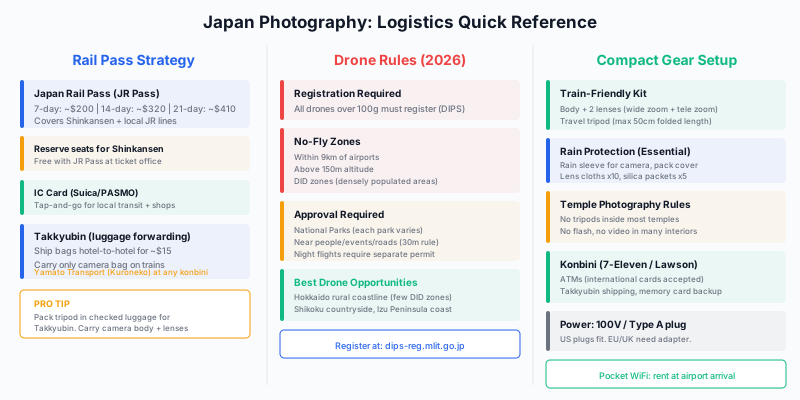
The JR Pass provides unlimited travel on all JR train lines, including most Shinkansen routes, for 7, 14, or 21 consecutive days. For a 14-day photography trip covering Kyoto, the Japanese Alps, and Hokkaido, the 14-day pass pays for itself within the first three legs.
Critical JR Pass notes for photographers:
- Reserve seats on the Shinkansen at ticket offices. This is free with the JR Pass and guarantees you a window seat, which matters when Fuji is visible from the Tokaido line.
- The Nozomi and Mizuho trains are excluded from the standard JR Pass. Use the Hikari instead on the Tokaido Shinkansen (Tokyo to Kyoto: approximately 2 hours 40 minutes vs. 2 hours 15 minutes on the Nozomi).
- Local JR lines access many remote photography locations that private railways do not reach.
Takkyubin: Ship Your Luggage
This service is transformative for photographers traveling by train. At any convenience store (konbini), hotel, or Yamato Transport office, you can ship your large luggage to your next hotel for approximately 1,500 to 2,500 yen per bag. The service is overnight within Honshu and two days to Hokkaido.
The practical benefit: you board the Shinkansen with only your camera bag and a light daypack. Your tripod, extra lenses, laptop, and clothing arrive at your hotel before you do. This is not a luxury. On trains with limited overhead storage and no dedicated luggage space, it is a necessity for anyone carrying photography equipment.
Drone Regulations in Japan
Japan’s drone regulations tightened significantly in recent years. As of 2026, all drones over 100 grams must be registered with the Ministry of Land, Infrastructure, Transport and Tourism (MLIT) through the DIPS (Drone Information Platform System) online portal.
Key restrictions:
- No flying in DID (Densely Inhabited Districts), which covers virtually all urban areas including Kyoto, Tokyo, and Osaka
- No flying above 150 meters
- No flying within 9 kilometers of airports
- No flying near people, vehicles, or buildings without a 30-meter clearance
- Night flights require separate approval
- National parks: each park sets its own drone policy. Most restrict or prohibit drone use.
Where you can fly: The most accessible drone opportunities are in rural Hokkaido (coastline, farmland, mountains), the Izu Peninsula coast, and rural Shikoku. Even in these areas, confirm local regulations and obtain permission from landowners where applicable.
The honest assessment: Japan is one of the more restrictive countries for drone photography. Plan your aerial work for Hokkaido’s rural areas and the southern coastlines, and leave the drone at the hotel in Kyoto and Tokyo.
Sample 14-Day Photography Itinerary
This itinerary is designed for autumn (late October through mid-November), Japan’s most tonally rich photography season.
| Day |
Location |
Focus |
Accommodation |
| 1 |
Arrive Tokyo |
Shinjuku and Shibuya night photography |
Shinjuku hotel |
| 2 |
Tokyo |
Asakusa (Senso-ji dawn), Meiji Shrine, Tokyo Tower at dusk |
Shinjuku hotel |
| 3 |
Train to Nikko |
Toshogu Shrine, autumn foliage, Kegon Falls |
Nikko ryokan |
| 4 |
Nikko to Kamikochi |
Transfer via Matsumoto, evening arrival |
Kamikochi lodge |
| 5 |
Kamikochi |
Dawn at Kappa Bridge, Myojin Pond, Taisho Pond sunset |
Kamikochi lodge |
| 6 |
Alps to Takayama |
Takayama old town, morning markets |
Takayama ryokan |
| 7 |
Train to Kyoto |
Afternoon: Arashiyama bamboo, evening: Fushimi Inari scout |
Kyoto hotel |
| 8 |
Kyoto |
Dawn: Fushimi Inari. Kinkaku-ji, Philosopher’s Path, night: Gion |
Kyoto hotel |
| 9 |
Kyoto |
Tofuku-ji autumn maples, Eikando night illumination |
Kyoto hotel |
| 10 |
Kyoto / Nara |
Nara deer park and Todai-ji, or Kyoto reshoot day |
Kyoto hotel |
| 11 |
Fly to Hokkaido |
Biei Blue Pond (afternoon illumination) |
Asahikawa hotel |
| 12 |
Eastern Hokkaido |
Drive to Kushiro. Akan-Mashu National Park |
Kushiro hotel |
| 13 |
Kushiro |
Red-crowned cranes at Tsurui sanctuary (dawn), Kushiro Marshland |
Kushiro hotel |
| 14 |
Hokkaido / Fly home |
Morning crane session, fly Kushiro to Tokyo to international departure |
– |
Itinerary notes:
- Ship luggage via takkyubin from each base to the next. Carry only camera bag on trains.
- The Kyoto block allows three full days. Cherry blossom season requires at least this long to account for weather variability.
- Hokkaido requires internal flights from Tokyo or Osaka. Peach Aviation and Jetstar Japan offer affordable domestic flights.
- This itinerary can be shifted to spring by replacing autumn foliage targets with cherry blossom locations and moving the Alps days to Lake Kawaguchiko for Fuji compositions.
Equipment Recommendations for Japan
Japan rewards compact, versatile setups. You will spend significant time on trains, in temples that prohibit tripods, and in narrow urban lanes where changing lenses is impractical.
The Japan Photography Kit
| Item |
Recommendation |
Why |
| Body |
Mirrorless full-frame |
Compact size for trains, high ISO for temples |
| Wide zoom |
16-35mm f/2.8 or equivalent |
Temples, landscapes, Alps |
| Standard zoom |
24-70mm f/2.8 |
All-purpose, gardens, street |
| Telephoto |
70-200mm f/2.8 or 100-400mm |
Wildlife (cranes, monkeys), Fuji compression |
| Fast prime |
35mm f/1.4 or 50mm f/1.4 |
Tokyo night photography, temple interiors |
| Tripod |
Travel carbon fiber (max 50cm folded) |
Compact for trains, avoid attention at temples |
| Rain protection |
Rain sleeves x4, pack cover |
Mandatory during tsuyu and uncertain weather |
| Filters |
Polarizer, 6-stop ND |
Polarizer for foliage saturation, ND for waterfalls |
Rain Preparedness
Japan’s climate delivers rain in every season. The tsuyu rainy season (June through mid-July on Honshu) is the most sustained, but rain is possible year-round. Carry rain sleeves for your camera, a waterproof pack cover, and extra microfiber lens cloths. The Olympus and Panasonic Micro Four Thirds bodies offer the best weather sealing in compact form, but full-frame bodies from Sony, Nikon, and Canon all handle moderate rain if protected.
Exercises for Japan-Ready Photography
Exercise 1: The Dawn Discipline
Before your trip, practice waking and shooting at dawn for seven consecutive days at home. Set up your camera, compose, and shoot in the ten minutes bracketing sunrise. This builds the habit and the body clock you need for Japan’s pre-dawn temple sessions.
Exercise 2: Fast Prime Night Walk
Take a 35mm or 50mm prime into your nearest city at night. Shoot for two hours using only available light, no flash, no tripod. Work through the ISO and shutter speed combinations from the Tokyo night table above. Review the results and identify your camera’s high-ISO ceiling for acceptable noise levels.
Exercise 3: The Compact Kit Challenge
Pack your Japan kit into a single camera bag that fits under a train seat (maximum 40 x 25 x 20 cm). Take this kit on a full day of shooting at home. Note every moment you wished for a lens or accessory you left behind. Refine the kit, then repeat. The goal is a kit you trust completely within the size constraint.
Exercise 4: Seasonal Color Calibration
Find a location with autumn foliage or spring blossoms near your home. Shoot the same tree or garden at three different white balance settings: auto, daylight (5200K), and cloudy (6000K). Process each in Lightroom using the same preset. Learn which white balance setting produces the most accurate and appealing color for natural foliage, so you arrive in Japan with this decision already made.
Conclusion
Japan is not a destination you check off a list. It is a country that changes depending on when you arrive, and the version of Japan you photograph in January bears almost no resemblance to the version you photograph in April or November. The red-crowned cranes dancing in Hokkaido frost, the cherry blossoms reflecting in Kyoto canal water, the neon-soaked alleys of Shinjuku at midnight, these are not different angles on the same subject. They are entirely different photographic worlds contained within a single country.
The photographers who return with the strongest work share one trait: they chose a season and committed to it fully, rather than trying to see everything in a single trip. Choose your season. Learn the timing. Arrive prepared. Japan rewards the photographer who shows up at 5:30 AM with the same generosity it has shown artists for a thousand years.