The Most Expensive Photograph You Never Took
A photographer I know flew to Morocco with a Mavic 3 Pro for a two-week landscape expedition. At customs in Marrakech, officers confiscated the drone, the batteries, the controller, and the charging hub. Total loss: approximately $3,200 in equipment plus the aerial photographs that were the primary purpose of the trip. Morocco has banned consumer drones since 2015, and no amount of arguing at the customs desk changes that.
This story is not exceptional. It repeats itself at airports around the world every week. Drones confiscated in Morocco. Fines issued in Japan. Criminal charges filed in Egypt. The consequences of flying a drone illegally in a foreign country range from equipment seizure to imprisonment, and “I did not know” is never a valid defense.
Drone regulations are the least creative aspect of aerial photography and the most consequential. Get them wrong and you lose equipment, pay fines, face criminal charges, or simply miss the aerial photographs that justified your expedition. Get them right and you fly with confidence in dozens of countries worldwide.
This guide covers the regulations, strategies, and practical logistics that travel photographers need to fly legally across international borders. Regulations change constantly, so treat this as a framework and starting point, not a substitute for checking current rules through the national aviation authority of every country you visit.
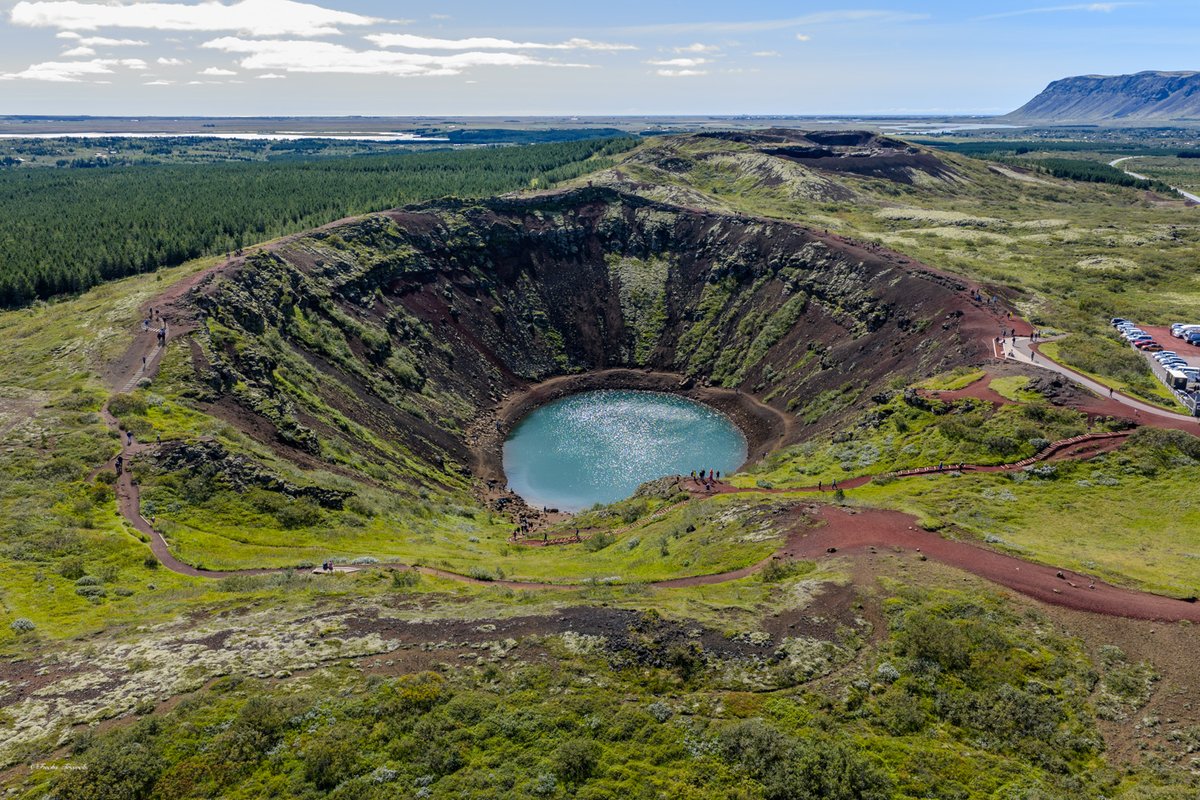
Photo: Amin Ghadersohi
The reward for doing your regulatory homework: perspectives like this aerial view of Kerið crater in Iceland, impossible from the ground. Photo by Aerial Media.
The Four-Tier Regulation Framework
Every country’s drone regulations fall into one of four tiers. Understanding which tier your destination occupies determines how much preparation you need and whether to bring a drone at all.
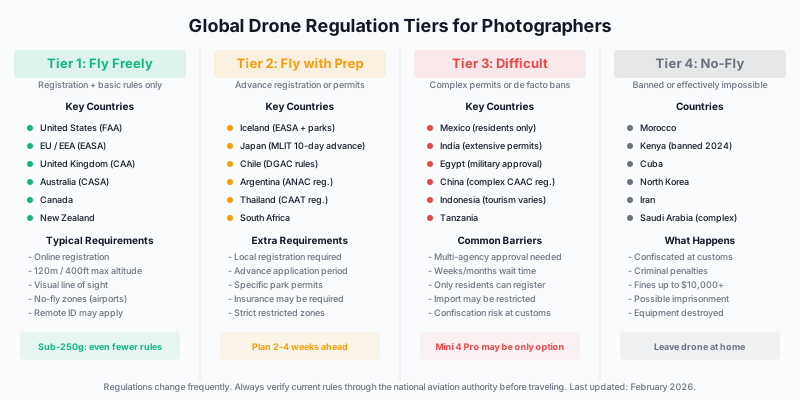
Tier 1: Fly Freely (Registration + Basic Rules)
These countries have clear, accessible regulatory frameworks that allow recreational and photographic drone use with standard registration and basic operational rules. The process is typically online, takes minutes, and costs little or nothing.
Countries: United States, European Union and EEA member states, United Kingdom, Australia, Canada, New Zealand.
What to expect: Online registration (often transferable across borders within the EU), a maximum altitude of 120 meters (400 feet), visual line of sight requirements, no-fly zones around airports and sensitive infrastructure, and in some cases a short online competency test.
The EU advantage: A drone registration in any EU member state is valid across all 27 EU countries plus Norway, Iceland, Switzerland, and Liechtenstein through the EASA framework. Register once, fly across Europe. This is the most photographer-friendly regulatory system in the world.
Tier 2: Fly with Preparation (Advance Permits or Complex Registration)
These countries allow drone use but require advance planning, local registration, specific permits, or a combination. Flying legally is achievable but demands preparation weeks before your trip.
Countries: Iceland (EASA plus park-specific rules), Japan (MLIT registration with 10-day advance application for tourists), Chile, Argentina, Thailand, South Africa, much of Southeast Asia.
What to expect: Local registration that may need to be completed before arrival, specific park or conservation area permits, insurance requirements, and potentially a waiting period between application and approval.
Tier 3: Difficult (Complex Multi-Agency Approval)
These countries have regulations that make legal drone use technically possible but practically difficult for visiting photographers. The barriers include resident-only registration, multi-agency approval processes, or bureaucratic timelines that exceed typical trip durations.
Countries: Mexico (only residents can register drones over 250g), India (extensive permit system), China (complex CAAC registration), Egypt (military approval required), Indonesia (varies by region), Tanzania.
Strategy: In Tier 3 countries, the DJI Mini 4 Pro (249g) may be your only viable option, as sub-250g drones face fewer restrictions in some of these jurisdictions. Research whether the sub-250g exemption applies before committing.
Tier 4: No-Fly (Banned or Effectively Impossible)
These countries prohibit consumer drones entirely, confiscate them at customs, or impose penalties severe enough that the risk is not worth taking.
Countries: Morocco, Cuba, North Korea, Iran, Saudi Arabia (complex), and others.
Strategy: Leave the drone at home. Attempting to smuggle a drone through customs in a Tier 4 country is reckless. The financial loss of confiscated equipment is the least of your worries; criminal penalties in some countries include imprisonment.
Country-by-Country Guide for Top Photography Destinations
The following details cover the destinations most relevant to landscape and travel photographers. Regulations are current as of February 2026 but can change without notice.
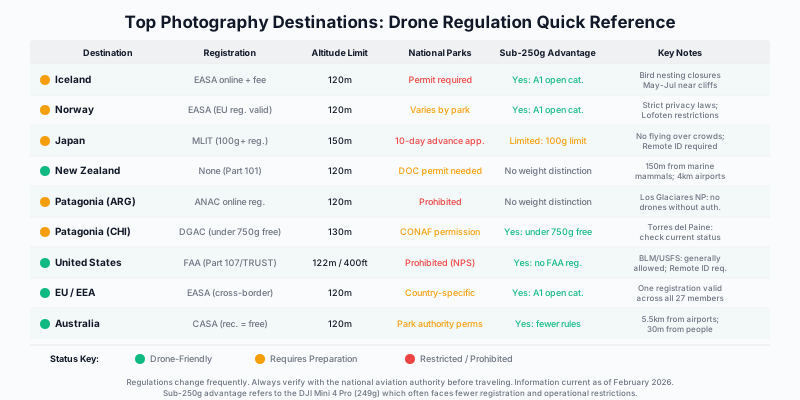
Iceland
Iceland is a Tier 2 destination that rewards advance preparation. Since Iceland adopted EASA regulations, the framework is structured and clear.
Registration: Required for all drones with cameras, regardless of weight. Register online through the Icelandic Transport Authority (Samgongustofa) portal. The fee is approximately 5,500 ISK (around $40 USD) and the registration is valid for five years. EU/EEA residents with existing EASA registration may be able to fly under their home registration, but verify current cross-recognition status before travel.
Competency: Most recreational operators fall under the EASA Open Category, which requires passing a free online exam (A1/A3). Complete this before arriving in Iceland.
National parks and nature reserves: This is where Iceland becomes complicated. Each protected area sets its own drone policy. Vatnajokull National Park, Thingvellir National Park, and Skaftafell all have specific restrictions that change seasonally. Contact the relevant park authority directly before your trip.
Bird nesting restrictions: From May through July, drone flight near sea cliffs and nesting colonies is prohibited or severely restricted. This affects Dyrhólaey, Latrabjarg, and many coastal areas that are prime photography locations.
Practical tip: The vast majority of Iceland’s most photogenic locations, including Vestrahorn, Stokksnes, Kirkjufell, Jokulsarlon, and the highland interior, are outside national park boundaries and accessible for drone photography with standard EASA compliance. Plan your drone flights for these locations and save your park visits for ground-based photography.
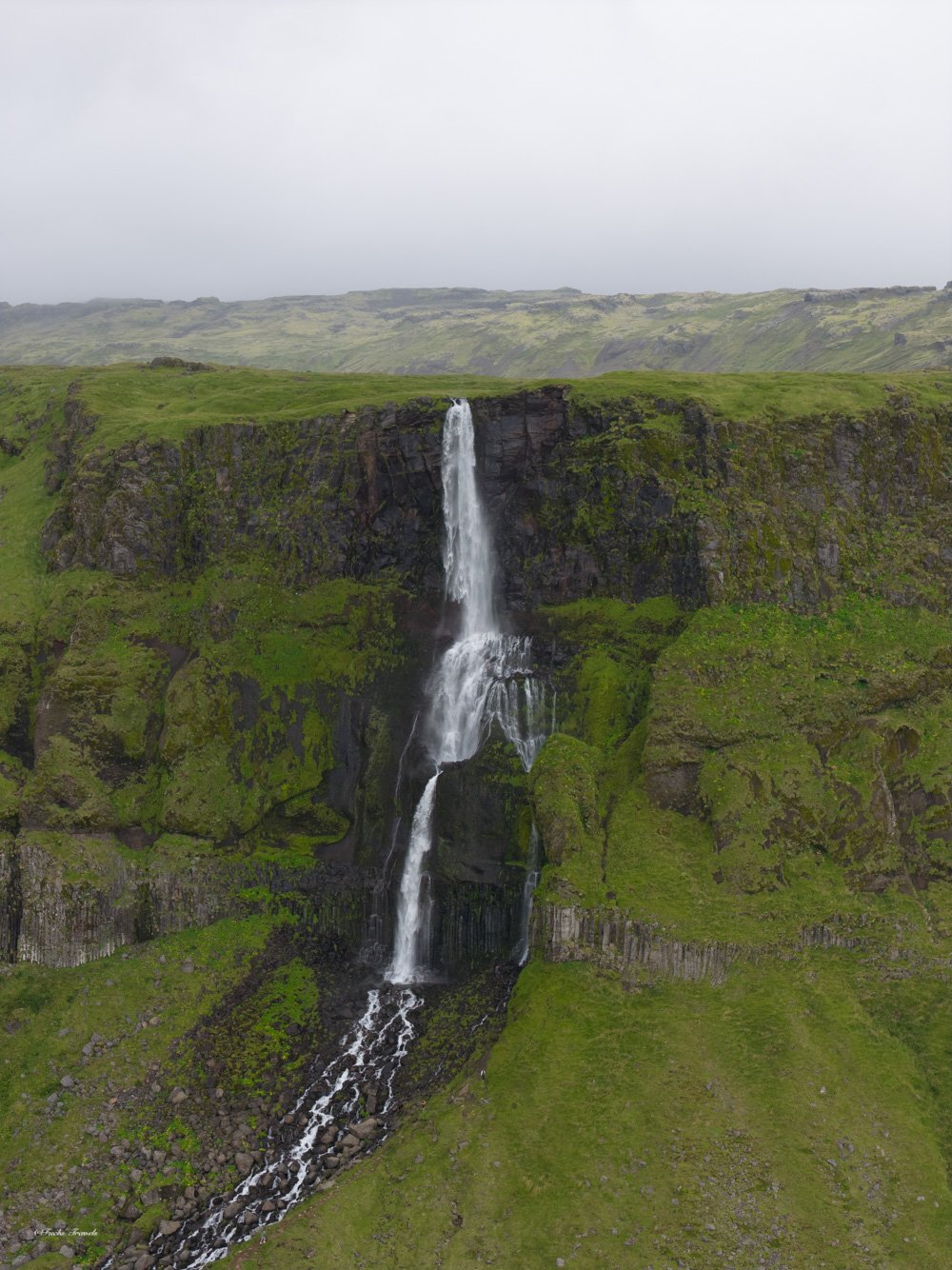
Photo: Amin Ghadersohi
An Icelandic highland waterfall shot from 80 meters — outside national park boundaries, fully compliant with EASA Open Category rules. Photo by Aerial Media.
Norway and Lofoten
Norway follows EASA regulations through the EEA agreement, making it seamless for EU-registered drone operators.
Registration: EU/EEA registration is valid in Norway. Non-EU visitors must register with the Norwegian Civil Aviation Authority (Luftfartstilsynet). Mark your drone with your operator number.
Lofoten specifics: Several municipalities in Lofoten have implemented local drone restrictions, particularly around Reine and Hamnoy where tourism density is highest. Check local notices and respect temporary flight restrictions during events or emergencies.
Privacy: Norway has strict privacy laws. Flying over private property, photographing identifiable people without consent, or publishing footage of individuals can result in legal action under the Penal Code. In practice, this means avoiding populated areas and focusing on landscape subjects.
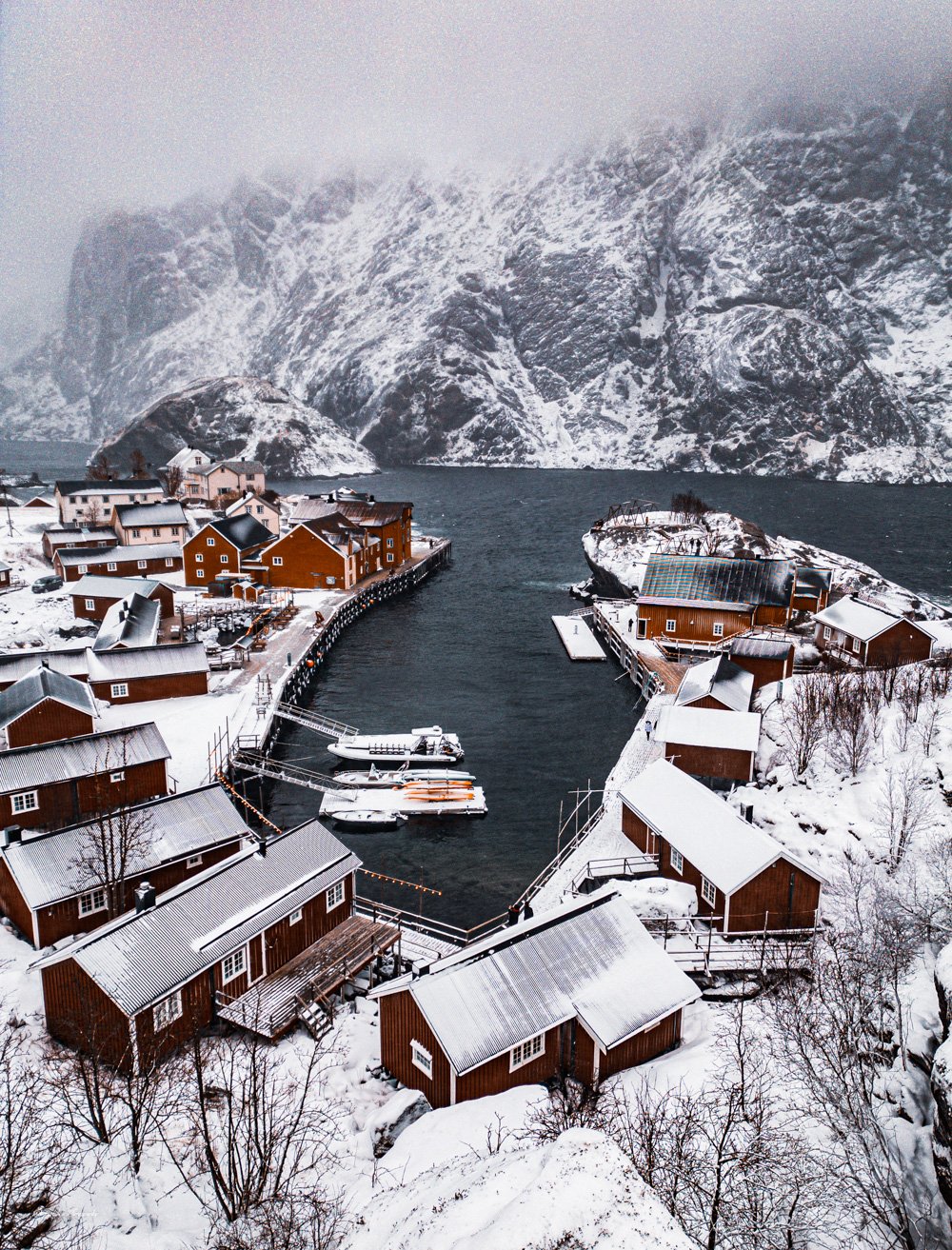
Photo: Amin Ghadersohi
Nusfjord fishing village in Lofoten from above — captured during an early morning flight when no people were present, respecting Norway’s privacy requirements. Photo by Aerial Media.
Japan
Japan is a Tier 2 destination with the most structured advance-application requirement of any major photography destination.
Registration: All drones weighing over 100 grams must be registered with the Ministry of Land, Infrastructure, Transport and Tourism (MLIT). This 100-gram threshold means the Mini 4 Pro (249g) requires registration. There is no consumer drone in the DJI lineup that avoids Japanese registration.
Tourist application: Foreign visitors must apply to MLIT at least 10 business days before their planned flight date. The application is submitted online and requires flight plans, proof of insurance, and details of the specific locations where you intend to fly.
Restricted areas: Urban areas (Densely Inhabited Districts, or DIDs), airport zones, and areas above 150 meters are prohibited without special permits. Most major cities, including central Tokyo, Kyoto, and Osaka, are classified as DIDs.
Where to fly: Rural Japan, the Japanese Alps (Kamikochi, Tateyama), Hokkaido countryside, and non-urban coastal areas offer legal flying with proper registration. The most photogenic temple compounds in Kyoto are surrounded by DID zones, so plan for ground-based photography there.
Remote ID: Required for all registered drones. Verify that your drone’s firmware supports Japanese Remote ID compliance before traveling.
New Zealand
New Zealand is among the most drone-friendly destinations for photographers, with a regulatory framework that is clear and achievable.
Registration: No registration or license is required for recreational drone use under Part 101 of the Civil Aviation Rules. This is unusual globally and makes New Zealand exceptionally accessible for visiting drone photographers.
Conservation land (DOC): Any drone taking off, landing, or hovering on Department of Conservation land requires a permit. This includes all national parks, marine reserves, and most scenic reserves. Apply through the DOC website before your trip. Permits are generally granted for non-commercial photography but require advance planning.
Marine mammals: You must maintain a minimum horizontal distance of 150 meters from any marine mammal when flying below 600 meters above sea level. This affects coastal photography anywhere seals, dolphins, or whales may be present.
Key locations: Milford Sound, Mount Cook/Aoraki, Queenstown, and Wanaka are all DOC-managed areas requiring permits. The non-DOC areas of the Mackenzie Country, Canterbury Plains, and private farmland offer legal flying without permits (with landowner permission).
Patagonia: Argentina and Chile
Patagonia spans two countries with different regulatory frameworks, adding complexity for photographers working both sides of the border.
Argentina: Register your drone online with ANAC (National Civil Aviation Administration) before arrival. Registration is free for drones under 10 kg. Maximum altitude: 120 meters. National parks, including Los Glaciares (Perito Moreno Glacier) and Nahuel Huapi, prohibit drones without specific authorization that is rarely granted to individual photographers.
Chile: Drones under 750 grams operate with minimal restrictions outside urban areas and can fly up to 50 meters above obstacles without registration. Drones above 750 grams require DGAC (General Directorate of Civil Aeronautics) registration. Maximum altitude: 130 meters. Torres del Paine National Park is managed by CONAF, which sets its own drone policies that vary seasonally.
The sub-250g strategy: The Mini 4 Pro’s 249-gram weight clears Chile’s under-750g threshold, making it the most practical Patagonia drone. The Mavic 4 Pro requires full DGAC registration in Chile and ANAC registration in Argentina.
United States
The US has a mature regulatory framework that is straightforward for recreational use but has a critical limitation for landscape photographers.
Recreational use: Pass the free TRUST (The Recreational UAS Safety Test) exam online. Register your drone with the FAA ($5, valid for 3 years) if it weighs over 250 grams. The Mini 4 Pro is exempt from registration for recreational use.
Commercial use: Requires a Part 107 Remote Pilot Certificate. If you sell prints, license images, or use drone photographs for any commercial purpose, you legally need Part 107. The exam covers airspace, weather, and regulations. Study time: approximately two weeks. Exam fee: $175.
National Parks: Drones are prohibited on all National Park Service lands without a specific permit, which is rarely granted. This affects Yosemite, Grand Canyon, Yellowstone, Zion, Glacier, and every other NPS unit. Violators face fines up to $5,000 and possible criminal charges.
Where to fly: BLM (Bureau of Land Management) and USFS (US Forest Service) lands generally allow drone use under standard FAA rules. Many of America’s most photogenic landscapes, including the Utah desert, the Oregon coast, and vast areas of the American West, are BLM or USFS managed. Check specific land management policies before flying.
Remote ID: As of 2024, Remote ID is required for all drones operated in US airspace. Ensure your drone’s firmware is current.
Airline Travel with Drone Equipment
Getting your drone to the destination is a logistical challenge that starts at the airport. Battery regulations, customs procedures, and airline-specific policies all require advance planning.
Battery Rules
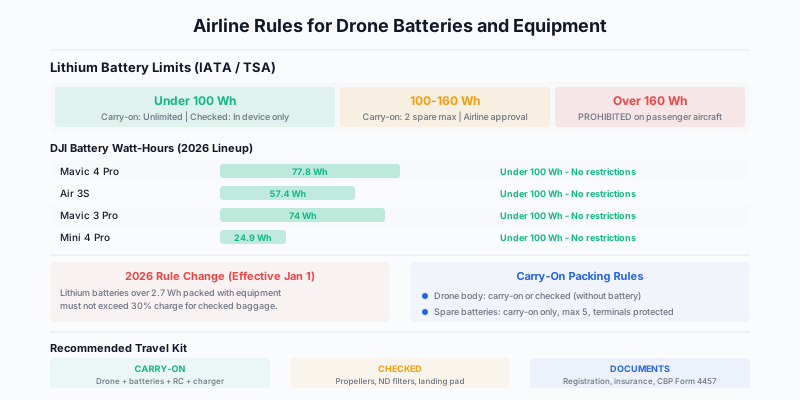
Lithium battery regulations are set by IATA and enforced by individual airlines. The rules are universal:
| Battery Capacity |
Carry-On |
Checked Baggage |
| Under 100 Wh |
Unlimited spare batteries |
In device only (battery installed) |
| 100-160 Wh |
Maximum 2 spare batteries (airline approval) |
In device only (airline approval) |
| Over 160 Wh |
Prohibited |
Prohibited |
The good news for DJI drone owners: every current consumer DJI battery falls under 100 Wh.
| Drone |
Battery Capacity |
Status |
| Mavic 4 Pro |
95.3 Wh |
Under 100 Wh, no restrictions |
| Mavic 3 Pro |
77 Wh |
Under 100 Wh, no restrictions |
| Air 3S |
62.5 Wh |
Under 100 Wh, no restrictions |
| Mini 4 Pro |
18.96 Wh |
Under 100 Wh, no restrictions |
Critical rule: Spare batteries (not installed in a device) must always go in carry-on baggage, never in checked luggage. Battery terminals must be protected with tape, caps, or individual cases to prevent short circuits. Airlines typically allow up to five spare batteries per passenger.
2026 rule change: Effective January 1, 2026, lithium-ion batteries with cells exceeding 2.7 Wh that are packed with equipment in checked baggage must not exceed 30% state of charge. This primarily affects checked equipment, not carry-on. Keep your drone and batteries in your carry-on to avoid this complication entirely.
Packing Strategy
Carry-on bag: Drone body with one battery installed, all spare batteries, remote controller, charging hub, and ND filters. This is your critical equipment and it never leaves your side.
Checked bag: Spare propellers, landing pad, carrying case, any non-electronic accessories. These items are replaceable and non-hazardous.
Documents to carry: Printed copies of your FAA registration (or relevant national registration), proof of insurance if required by your destination, and a US Customs CBP Form 4457 (Certificate of Registration for Personal Effects Taken Abroad). The 4457 proves you owned the drone before leaving the US and prevents customs officers from charging import duty when you return with it.
Customs and Import Considerations
Some countries require you to declare drone equipment at customs upon entry. Others have specific import restrictions. A few key situations:
- Morocco: Drones will be confiscated at customs regardless of declarations.\n- Kenya: Drones are permitted with a Kenya Civil Aviation Authority (KCAA) Remote Pilot License and operator certificate. Apply through the KCAA portal before travel.
- India: Drones may be held at customs pending approval from the Directorate General of Civil Aviation.
- Egypt: Military approval must be obtained before bringing a drone into the country.
- EU/Schengen: No special customs declarations required for personal drone equipment.
- Japan: Declare your drone on the customs form but no special import restrictions apply for personal use.
- Australia: Declare electronic equipment on the incoming passenger card. No restrictions on importing personal drones.
Pro tip: Photograph your entire drone kit (serial numbers visible) before departing on any international trip. If customs questions whether you purchased equipment abroad, this documentation, combined with the CBP 4457, provides proof of prior ownership.
The Sub-250 Gram Strategy
The DJI Mini 4 Pro weighs 249 grams, and that single gram below the 250g threshold opens doors that heavier drones cannot enter.
In the United States, drones under 250 grams do not require FAA registration for recreational use. In the EU, sub-250g drones operate in the most permissive Open Category (A1), allowing flight closer to uninvolved people and in more areas than heavier drones. In Japan, the threshold is 100 grams (which the Mini exceeds), but many other countries use 250g as their regulatory boundary.
Countries where sub-250g provides meaningful advantages:
- United States: No registration for recreational use
- EU/EEA: A1 Open Category (fewest restrictions)
- UK: No CAA registration required
- Australia: Fewer operational restrictions
- Chile: Under 750g, minimal rules outside urban areas
- Canada: Micro category, fewer restrictions
The Two-Drone Travel Kit
Many professional travel photographers carry both a Mavic 4 Pro and a Mini 4 Pro on international expeditions. The Mavic handles primary landscape work where image quality justifies the regulatory overhead. The Mini serves as the backup drone, the regulatory workaround in strict countries, and the discreet option in locations where a large drone attracts unwanted attention.
The combined weight of both drones plus three batteries each is approximately 1,800 grams, lighter than a single professional zoom lens. The regulatory flexibility this combination provides is worth the additional weight and cost.
Insurance for International Drone Photography
Drone insurance serves two purposes: it protects your equipment, and it satisfies the liability requirements that several countries mandate for legal drone operation.
Equipment Insurance
Many homeowner’s and renter’s insurance policies do not cover drone equipment, especially outside the country of residence. Dedicated drone insurance from providers like SkyWatch or Verifly covers equipment damage, loss, and theft worldwide.
Cost: Approximately $500 to $1,200 per year for equipment coverage on a Mavic 4 Pro with $2,500 to $3,500 insured value. Pay-per-flight options through Verifly or SkyWatch start at approximately $5 to $15 per flight session.
Liability Insurance
Several countries require third-party liability insurance as a condition of legal drone operation:
| Country/Region |
Liability Insurance |
Minimum Coverage |
| EU/EEA (EASA) |
Required |
Varies by drone class |
| UK |
Required |
Varies by weight |
| Australia (commercial) |
Required |
$20M AUD typical |
| USA (Part 107) |
Recommended, not required |
N/A |
| Japan |
Recommended |
N/A |
| New Zealand |
Not required |
N/A |
SkyWatch offers on-demand liability coverage that satisfies EASA and UK requirements. Enable coverage for your specific flight dates and locations through the app.
Pre-Trip Regulation Checklist
Complete this checklist at least four weeks before any international photography expedition that includes drone work.
| Week |
Action |
Resources |
| 4 weeks before |
Research destination drone laws |
National aviation authority website, drone-laws.com |
| 4 weeks before |
Apply for any required permits |
Park authorities, aviation agencies |
| 3 weeks before |
Complete registration in destination country |
Online portals (EASA, MLIT, FAA, etc.) |
| 3 weeks before |
Pass any required competency exams |
EASA A1/A3, FAA TRUST |
| 2 weeks before |
Obtain liability insurance if required |
SkyWatch, Verifly |
| 2 weeks before |
File CBP Form 4457 at local customs office |
US Customs and Border Protection |
| 1 week before |
Print all registration and insurance documents |
Carry physical copies |
| 1 week before |
Update drone firmware to latest version |
DJI Fly app |
| 1 week before |
Verify airline battery policy for your carrier |
Airline website, DJI travel guide |
| Day of travel |
Charge batteries appropriately for checked items |
30% for checked, full for carry-on |
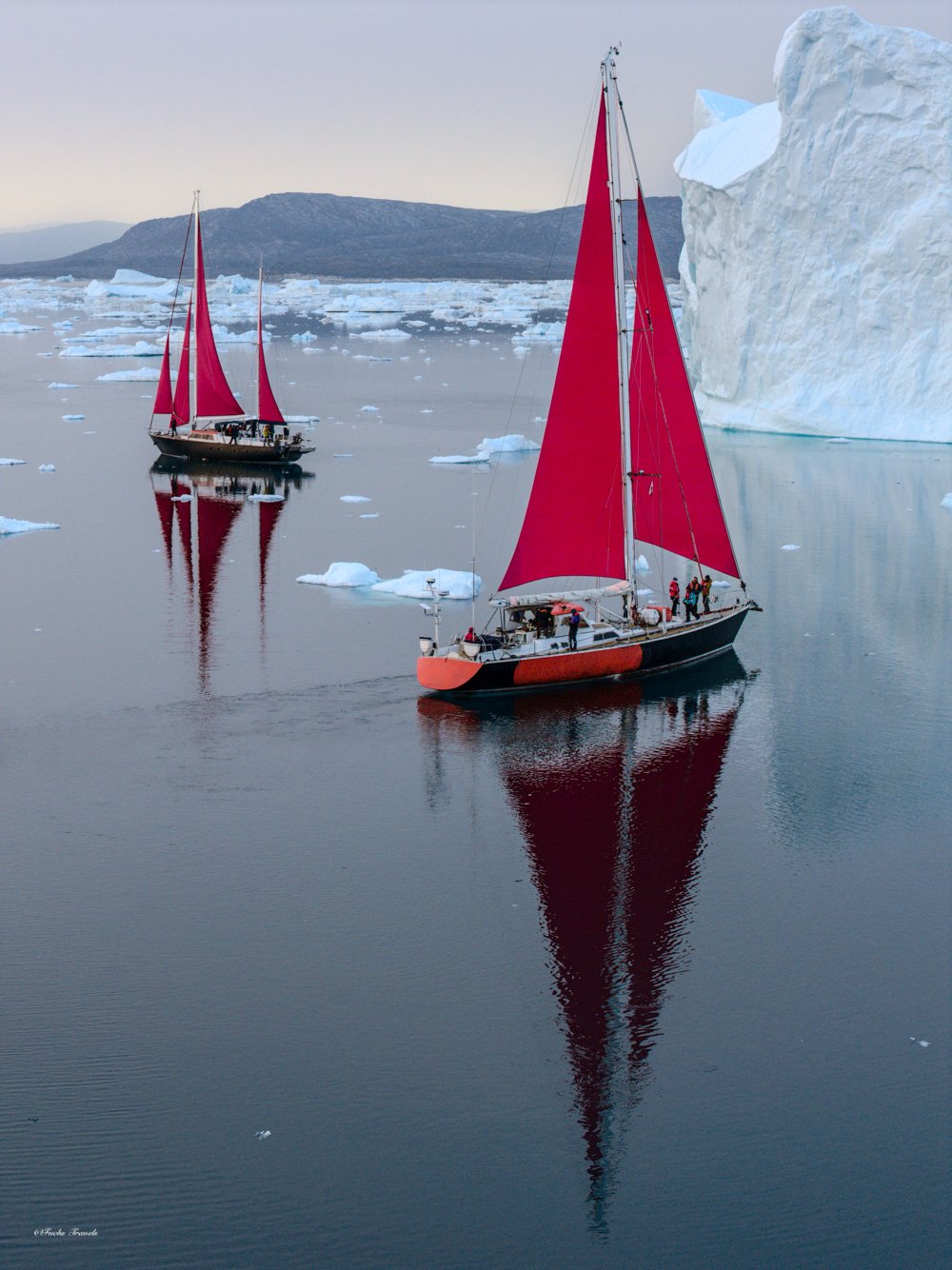
Photo: Amin Ghadersohi
Two sailboats threading through the icebergs of Disko Bay, Greenland — captured at 60 meters altitude, well within the 120-meter legal maximum. Always verify local regulations before flying in Arctic regions. Photo by Aerial Media.
When Not to Fly
Knowing when to leave the drone in the bag is as important as knowing when to fly it. Beyond regulatory restrictions, several situations warrant grounding your drone by choice:
Culturally sensitive locations: Temples, sacred sites, memorial grounds, and indigenous lands often have an expectation of solitude and reverence that a buzzing drone violates. Even where legal, flying at these locations is disrespectful and damages the reputation of all drone photographers.
Wildlife sensitivity: Nesting birds, marine mammals, and animals in protected habitats can be disturbed by drone noise and visual presence. Maintaining legal distances is the minimum standard. Ethical wildlife photographers exceed those distances.
Dense tourist areas: Flying over crowds of tourists is illegal in most jurisdictions and guaranteed to generate complaints, confrontations, and potential law enforcement involvement. Dawn and dusk flights avoid tourist density while delivering better light.
When the shot is not worth it: Not every location benefits from an aerial perspective. If the landscape is more compelling from ground level, the drone adds nothing. Fly because the aerial perspective genuinely serves the image, not because you packed the equipment and feel obligated to use it.
Exercises for Travel Readiness
Exercise 1: Regulation Research Sprint
Pick three countries you want to visit in the next two years. Spend one hour researching drone regulations for each country using only official government aviation authority websites, not blog posts or forums. Document the registration process, restrictions, and specific park policies for your intended photography locations. This exercise builds the research habit that prevents costly surprises.
Exercise 2: The Airport Dry Run
Pack your complete drone kit for air travel. Weigh the carry-on bag and verify it meets your preferred airline’s cabin baggage dimensions and weight limit. Go through your airline’s prohibited items list and confirm every component is compliant. Identify any items that might trigger additional screening and prepare to explain them clearly.
Exercise 3: Mini 4 Pro Proficiency
If you primarily fly a Mavic 4 Pro, spend three flight sessions using only the Mini 4 Pro. Learn its limitations: fixed aperture, smaller sensor, reduced wind stability, shorter flight time. Building proficiency on the Mini ensures you can produce quality work when it is the only drone you can legally fly.
Exercise 4: The Documentation Portfolio
Create a waterproof document folder containing printed copies of every registration, certificate, insurance policy, and equipment serial number for your drone kit. Store digital copies in a cloud folder accessible from your phone. In a customs dispute, having organized documentation immediately available demonstrates professionalism and often resolves the situation faster than verbal explanations.
Conclusion
Drone regulations are not creative obstacles. They are the framework within which you operate as a professional. Just as a landscape photographer researches sunrise times and weather forecasts before an expedition, a drone photographer researches registration requirements, airspace restrictions, and park policies before crossing a border.
The photographers who fly legally in dozens of countries share one trait: they treat regulatory research as a non-negotiable part of expedition planning. They register in advance, carry printed documentation, respect restricted areas, and carry a sub-250g backup for the destinations where regulations tighten.
The drone photographs that define your portfolio will be made in the countries where you prepared thoroughly enough to fly with confidence. The countries where you did not prepare will give you nothing but regret and, if you are unlucky, a customs receipt for confiscated equipment.
Do the research. File the paperwork. Fly legally. Then focus on the only thing that actually matters: making extraordinary aerial photographs.