The Ice Moves. You Have to Move With It.
You are standing on the boardwalk at the Ilulissat Icefjord viewpoint, watching icebergs the size of apartment buildings drift silently through a channel packed with frozen debris. The scale is almost impossible to process. A piece of ice that looks modest from the overlook turns out to be thirty meters tall when a fishing boat passes beneath it. The Sermeq Kujalleq glacier, the most productive in the Northern Hemisphere, has pushed these bergs into the fjord at a rate of forty meters per day, and they have been stacking up at the mouth of the fjord like traffic at a bottleneck for weeks.
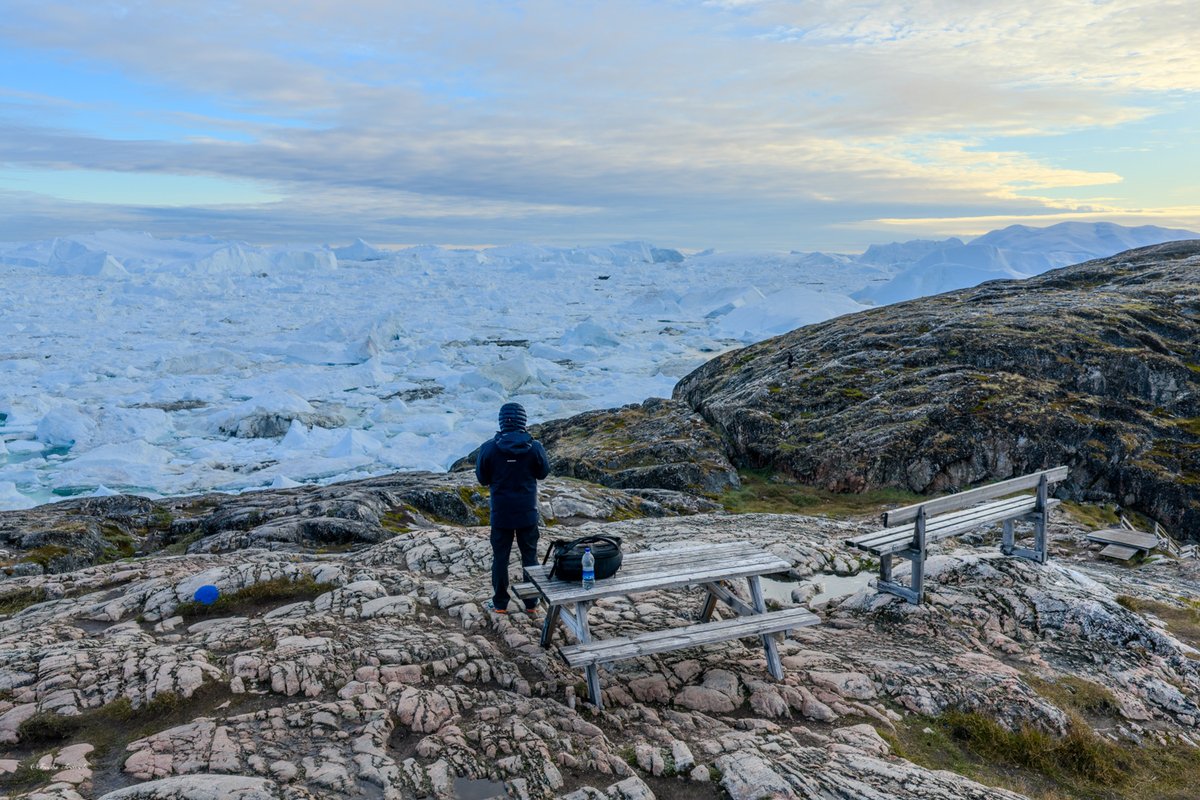
Photo: Amin Ghadersohi
Then one of them rolls. No warning. A berg that has been stable for days shifts its center of gravity, rotates ninety degrees, and sends a wave radiating outward across the fjord. The newly exposed surface is a blue so deep and saturated that it looks unreal, ice compressed under millennia of glacial weight until all air has been squeezed out and only short-wavelength light escapes. The sound reaches you a full second later: a low, resonant crack that vibrates in your chest.
This is Greenland. Not a place you visit casually, not a destination that tolerates half-hearted preparation, and not somewhere you can photograph adequately in a day or two. The ice moves on its own schedule, the light behaves unlike anywhere else on Earth, and the logistics of reaching and operating in this environment demand the same level of planning you would bring to any serious expedition. But the photographs you make here will be unlike anything in your portfolio. The ice is that good.
Ilulissat and the UNESCO Icefjord
Ilulissat is a town of 4,500 people on the west coast of Greenland at 69 degrees north latitude. Its name means “icebergs” in Kalaallisut, and the name is not metaphorical. The town exists at the mouth of the Ilulissat Icefjord, a UNESCO World Heritage Site where the Sermeq Kujalleq glacier discharges approximately 46 cubic kilometers of ice per year into Disko Bay.
The icefjord itself is roughly 40 kilometers long. At its mouth, where it opens into Disko Bay, icebergs accumulate behind a shallow underwater moraine that acts as a natural dam. When the pressure builds sufficiently, bergs break free and drift into the open bay, where they begin their journey south along the Greenland coast. Some of these icebergs are enormous: 100 meters tall above the waterline, with seven to eight times that mass hidden below. The largest bergs calved from Sermeq Kujalleq are among the biggest in the Northern Hemisphere.
The Icefjord Viewpoint Trail
GPS: 69.XX°N, 51.XX°W🔒 | Difficulty: Easy boardwalk, 1-3 hours | Best light: Midnight sun, sunset
The primary viewpoint trail runs from the center of Ilulissat south along the fjord edge. A well-maintained boardwalk system provides multiple overlook platforms at different elevations. The trail is accessible to all fitness levels and offers compositions at every stop.
Field strategy:
- The viewpoint trail runs roughly north-south along the eastern edge of the icefjord. During midnight sun season (late May through late July), the sun tracks along the northern horizon, meaning the ice field is front-lit or side-lit throughout the night. This is the optimal shooting window.
- The most dramatic compositions come from the southern viewpoints, where the trail rises above the fjord and you look north across the densest concentration of icebergs.
- Bring a 70-200mm telephoto in addition to your wide-angle. From the viewpoints, individual bergs are far enough away that telephoto compression reveals their scale against each other. Wide-angle shots capture the enormity of the field but can flatten the sense of individual berg size.
- Sound carries across the fjord with eerie clarity. When you hear cracking, a calving event is occurring somewhere in the field. Watch for movement, then shoot fast. Calving icebergs create surges and rolling events in nearby bergs that last 30-60 seconds and produce some of the most dynamic compositions.
Old Heliport Viewpoint
GPS: 69.XX°N, 51.XX°W🔒 | Difficulty: Easy | Best light: Evening and midnight sun
The area around the old heliport on the southern edge of Ilulissat provides an elevated perspective over the icefjord mouth where the largest bergs congregate before drifting into Disko Bay. This is less visited than the main boardwalk trail and offers more compositional freedom.
Disko Bay: Sailing Among Icebergs
The defining experience of Greenland photography is being on the water among the icebergs. Boat tours from Ilulissat run from May through October, ranging from two-hour zodiac trips to multi-day sailing expeditions. For serious photography work, the sailing option is categorically superior.
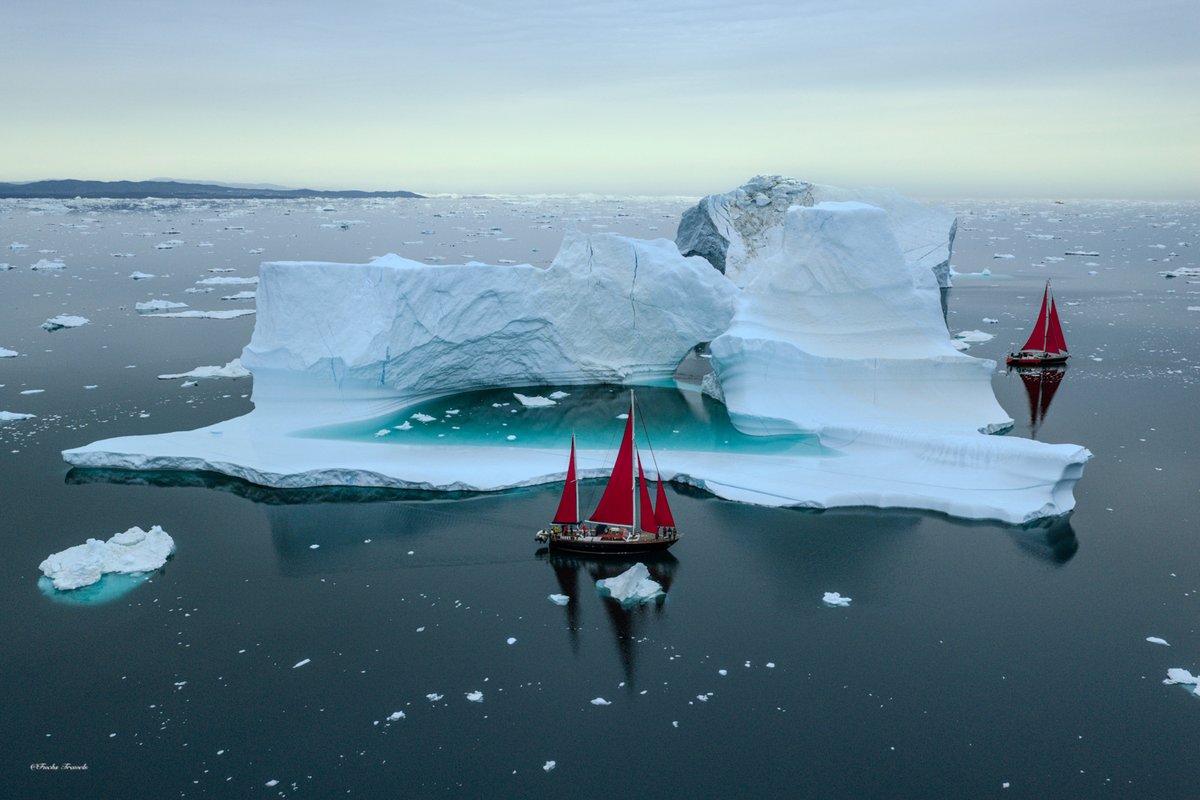
Photo: Amin Ghadersohi
The Red-Sailed Schooner Experience
Several wooden schooners operate out of Ilulissat during the summer season, offering multi-day sailing trips through the iceberg field. These vessels, with their distinctive red sails, provide both a platform for photography and a subject within the frame. A crimson sail against blue-white ice and turquoise water creates a color contrast that practically composes itself.
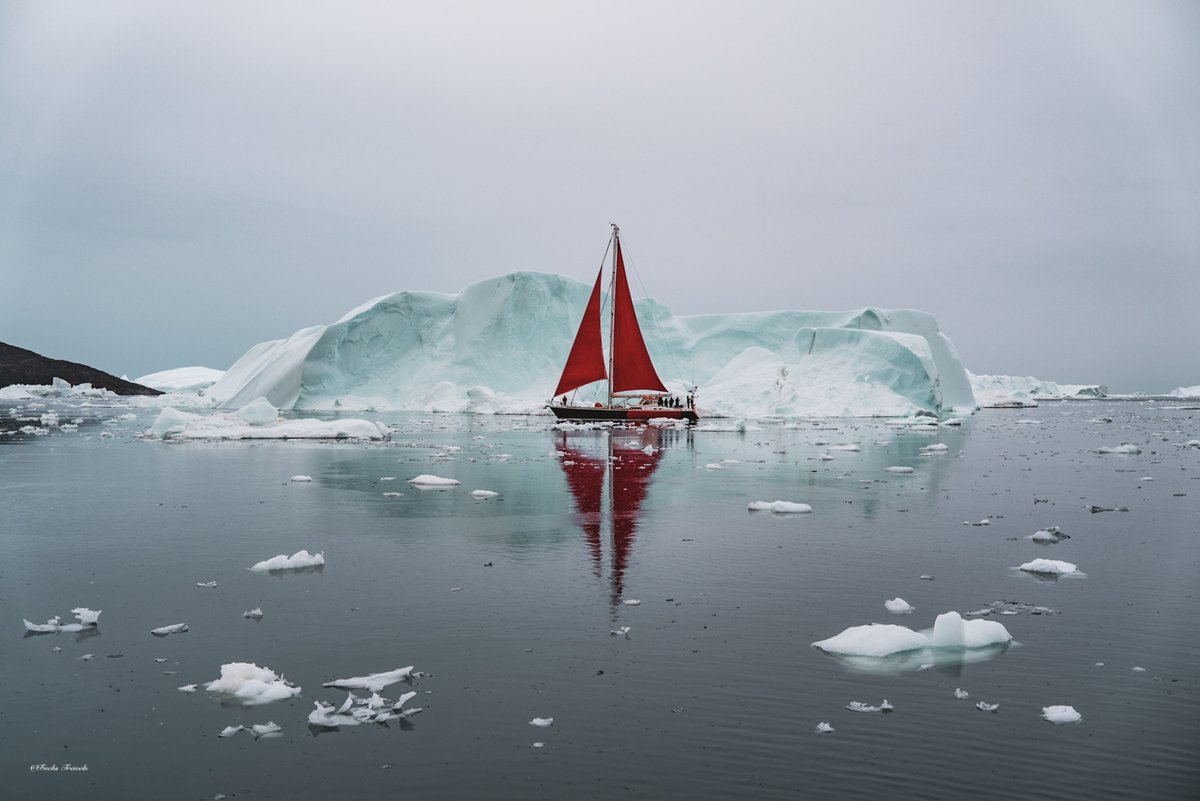
Photo: Amin Ghadersohi
What the boat gives you that the shore cannot:
- Scale reference: An iceberg that reads as a vague white mass from the viewpoint trail becomes a towering monolith when a 20-meter schooner passes at its base. The human-scale reference transforms the photograph from a landscape into a story.
- Three-dimensional compositions: From shore, icebergs are silhouettes against sky. From the water, you see their sculptural forms from every angle, the arches, the caves, the undercutting where warm water has melted the ice into organic shapes.
- Changing perspectives: The boat moves. Every minute brings a new compositional relationship between vessel, ice, water, and light. You cannot replicate this dynamism from a fixed viewpoint.
- Water-level reflections: Calm Disko Bay mornings produce mirror reflections of icebergs in the water surface. From the boat, you are at the optimal height to capture these reflections without the elevation that shore viewpoints impose.
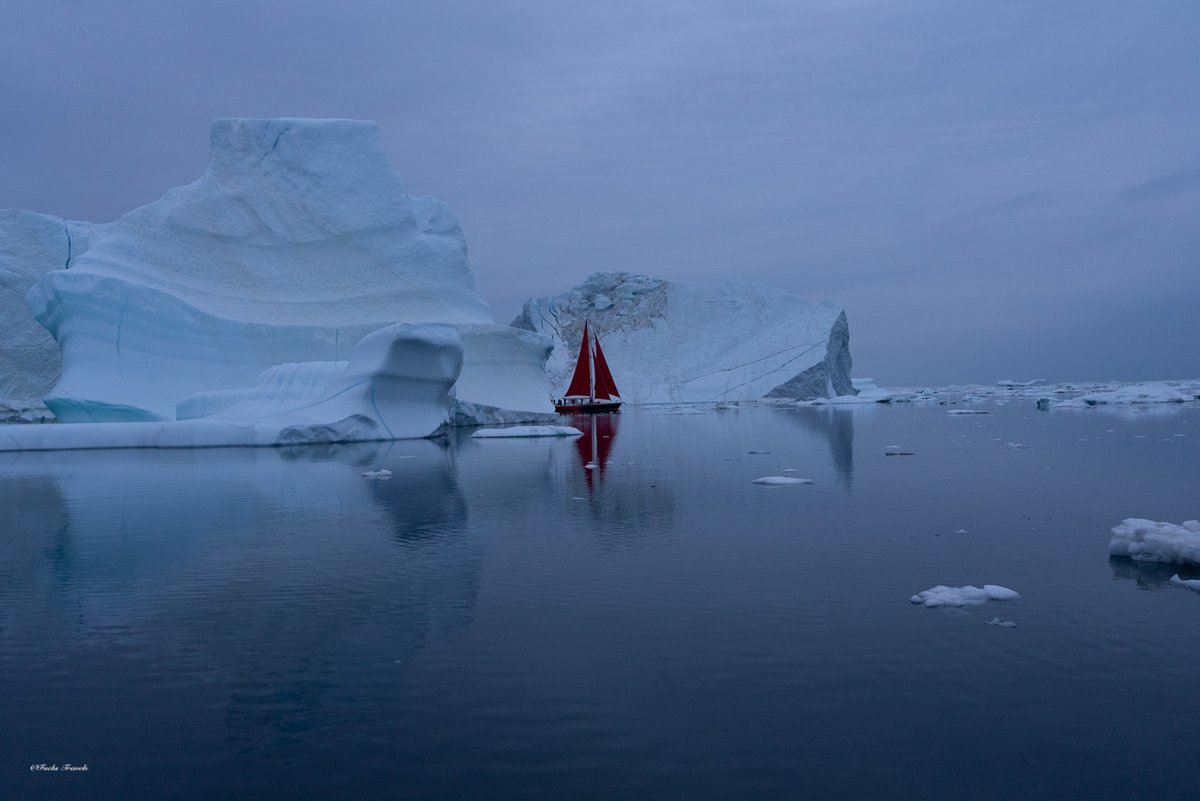
Photo: Amin Ghadersohi
Navigating the Iceberg Field
The schooner captains know the ice. They have spent years reading the bergs, predicting which are stable and which are about to roll, and finding passages through the field that maximize photographic opportunity while maintaining safe distances. A responsible captain maintains at least 200 meters from active icebergs (bergs showing signs of recent calving or instability).
This distance is not overcautious. When a 100-meter iceberg rolls, the displacement wave can capsize a small vessel at 150 meters. When a submerged section breaks free and rockets to the surface, it does so without warning and with violent force. The captain’s judgment on approach distance is final, and it should be.
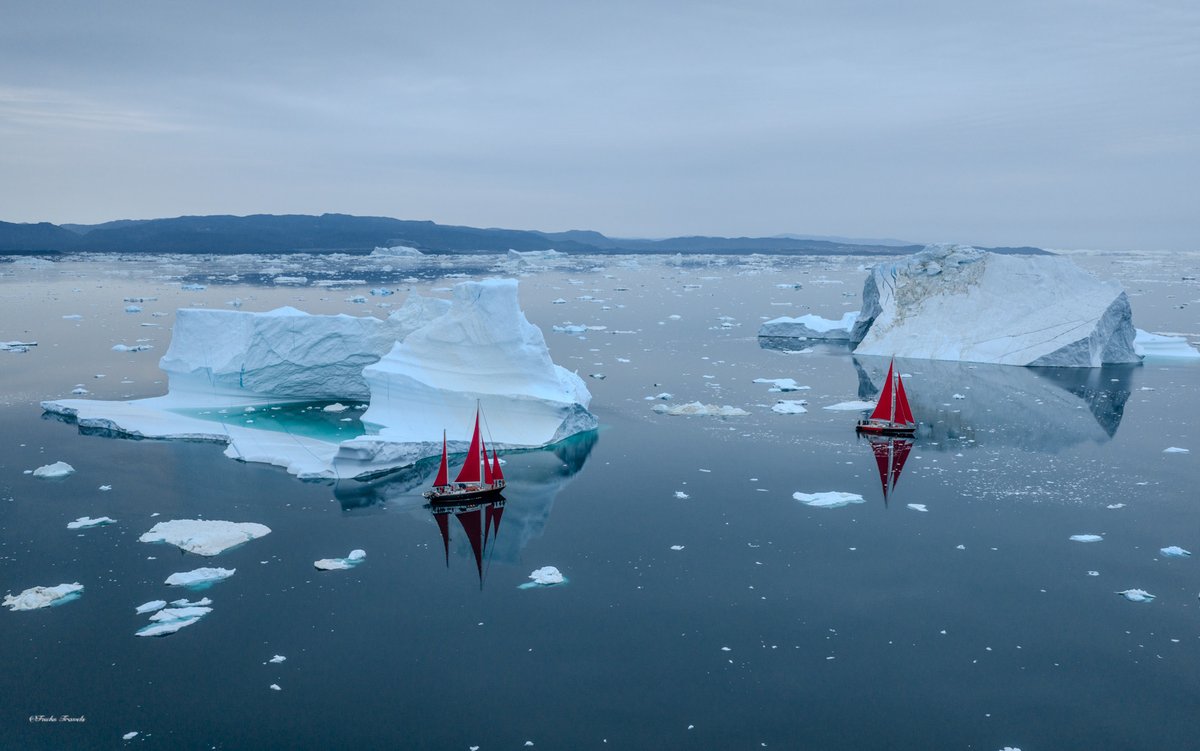
Photo: Amin Ghadersohi
Fog and Atmospheric Conditions
Greenland’s coast produces fog regularly, particularly when warm air meets cold water near the ice. Many photographers consider fog a nuisance. In Disko Bay, fog is a gift.
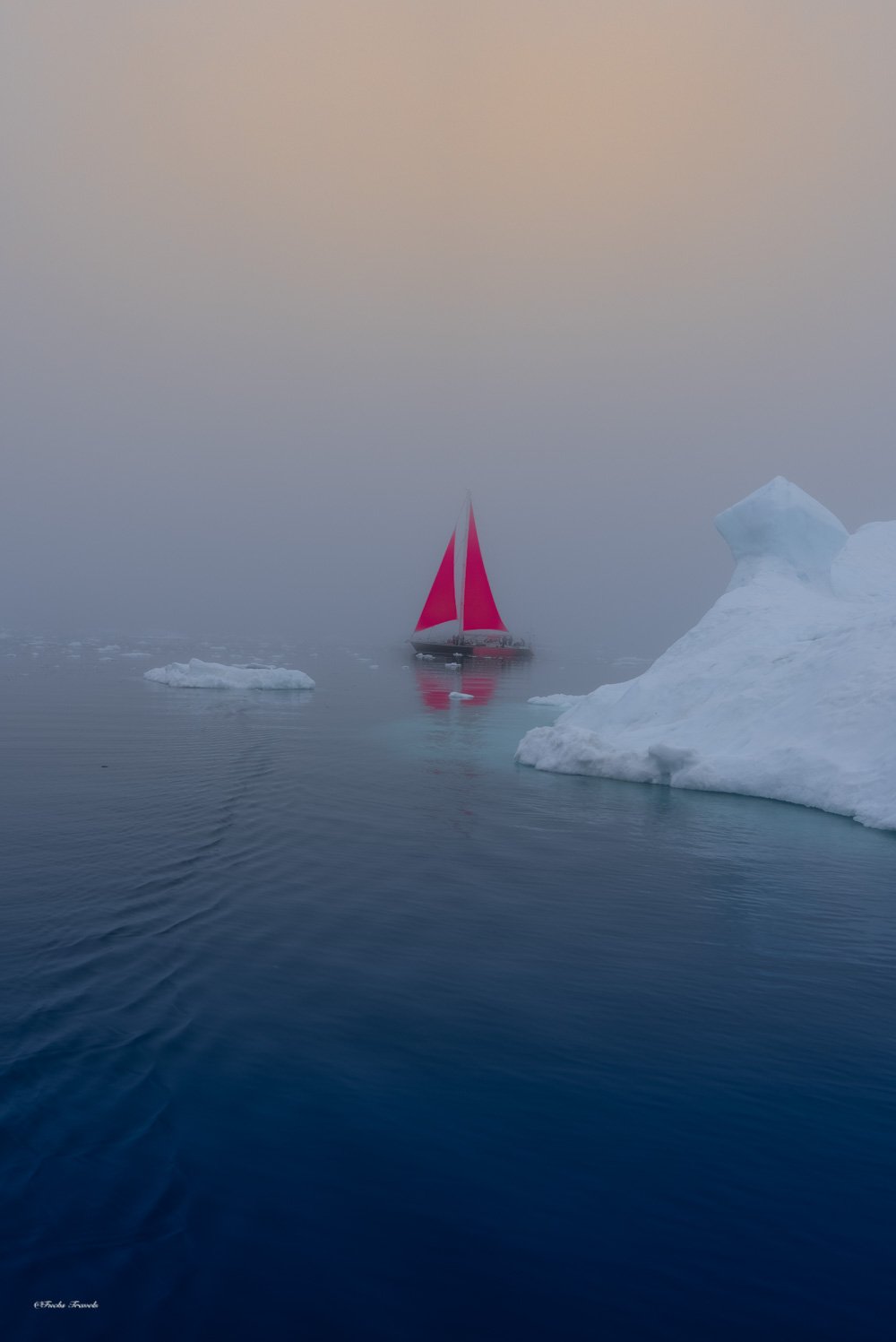
Photo: Amin Ghadersohi
Fog isolates icebergs from their surroundings, simplifies the background, and creates the kind of atmospheric depth that transforms a photograph from documentary to fine art. A single berg emerging from mist, with a schooner’s silhouette in the middle distance, produces an image that communicates the Arctic’s vastness more powerfully than any clear-sky panorama.
Fog photography settings:
- Increase exposure compensation by +0.7 to +1.0 EV. The camera’s meter will underexpose fog, rendering it gray rather than white.
- Focus manually or use a single autofocus point on the highest-contrast element in the frame. AF systems struggle in uniform fog.
- Shoot RAW. The subtle tonal gradations in fog are the first casualty of JPEG compression.
- Consider converting fog compositions to black and white. The monochromatic conditions often produce stronger results in monochrome.
Light in Greenland: The Midnight Sun and Beyond
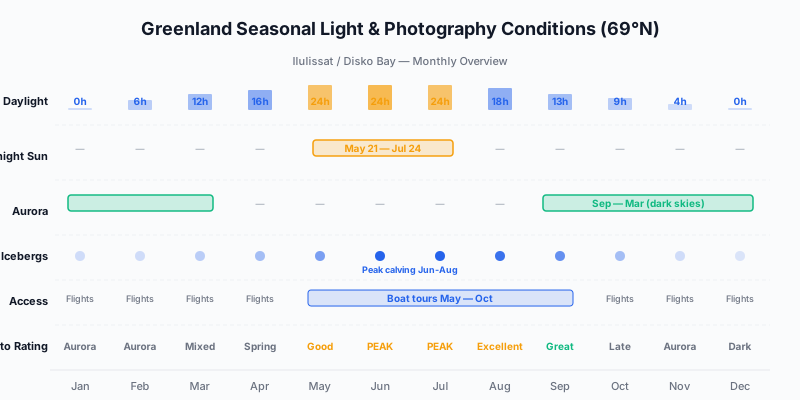
Greenland’s light conditions vary so dramatically across seasons that choosing when to visit is effectively choosing what kind of photographs you will make.
Midnight Sun Season (Late May through Late July)
At 69 degrees north, the sun does not set in Ilulissat from approximately May 21 through July 24. This creates an extended photography window unlike anything at lower latitudes. The sun traces a low circle around the horizon, dropping to its lowest point in the north around midnight, then climbing back toward the east without ever dipping below the horizon.
The result: golden hour light is available for hours, not minutes. From roughly 10 PM to 2 AM, the sun rakes across the ice field at an angle that sculpts every surface with warm directional light. Shadows are long. Textures are amplified. The ice, which appears white and featureless under high noon sun, reveals blues, turquoises, and subtle warm tones that are invisible at other times.
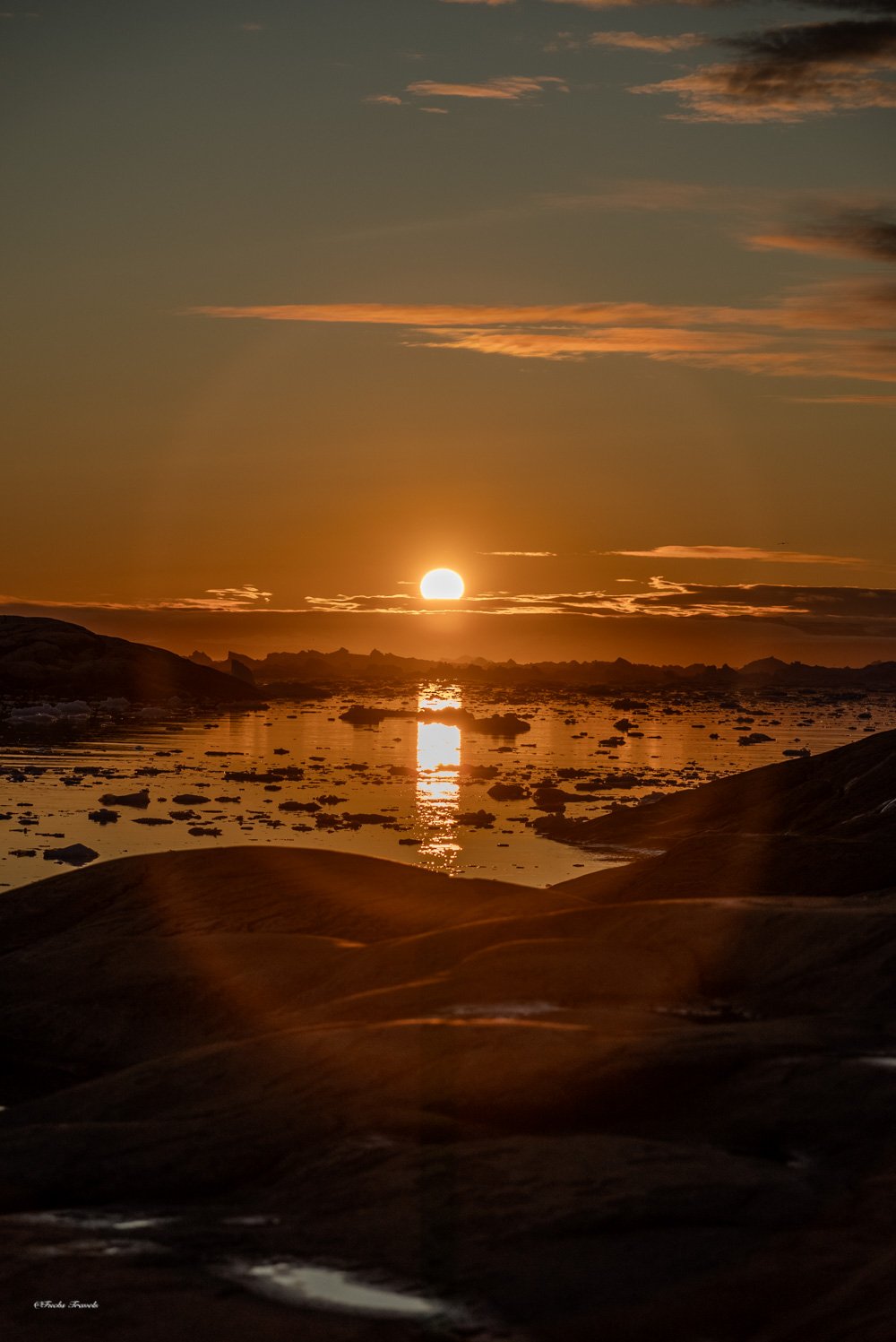
Photo: Amin Ghadersohi
The midnight sun paradox: Unlimited shooting time sounds ideal, but it creates a different kind of pressure. Without a defined sunrise or sunset, there is no urgency to be in position at a specific time. Photographers lose the discipline that scarcity imposes. Set a shooting schedule as if you had normal golden hours: commit to shooting from 10 PM to 2 AM, then rest. Without this structure, you will exhaust yourself trying to shoot around the clock and your work will suffer.
Golden Hour and Sunset (August through September)
As the sun begins to set again in late July, Greenland transitions into what many photographers consider its most productive light. August and September offer defined golden hours with increasingly dramatic sunset colors, the ice field is still active, and the diminishing light creates high-contrast conditions that reward technical skill.
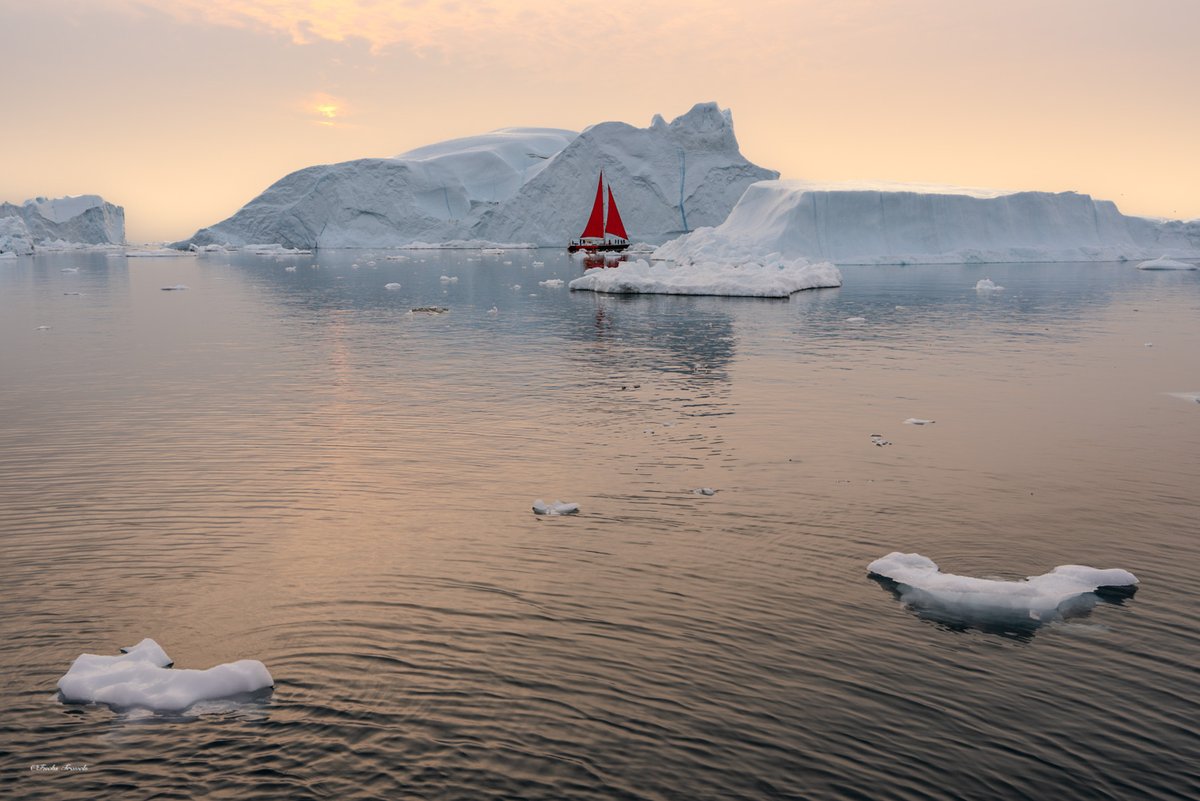
Photo: Amin Ghadersohi
September adds the possibility of northern lights. While the aurora season in Greenland runs from September through March, the combination of aurora and icebergs in September creates compositions available nowhere else.
Winter and Aurora Season (October through March)
Ilulissat enters polar night from late November through mid-January. The icefjord freezes, boat tours cease, and temperatures drop to -20C or below. Photographers who visit during this period come exclusively for the aurora borealis, which displays spectacularly at this latitude when geomagnetic conditions cooperate.
The challenge: the icefjord is frozen, eliminating the open water and drifting bergs that define summer photography. The bergs are locked in sea ice, which creates a different but still powerful visual: aurora sweeping over a frozen field of ice sculptures.
Photographing Ice: Technical Mastery
Ice is one of the most technically demanding subjects in landscape photography. It is simultaneously the brightest element in most scenes and the most texturally complex. Getting the exposure, white balance, and focus right determines whether your ice images look refined or blown out.
The Exposure Problem
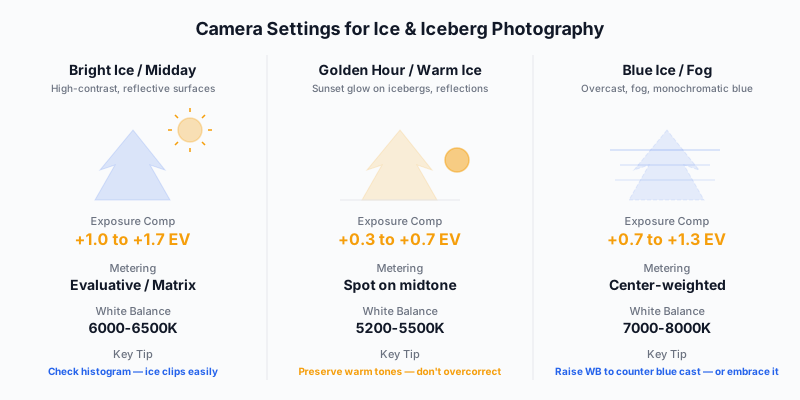
Ice and snow reflect 80-95% of incident light. Your camera’s meter reads this reflected light and tries to render it as middle gray, which means every automated exposure will underexpose ice by 1 to 2 stops. The result: dingy gray icebergs that look nothing like what you saw.
The solution is simple and non-negotiable: apply positive exposure compensation.
| Condition |
Exposure Compensation |
Rationale |
| Bright sun on white ice |
+1.3 to +1.7 EV |
Ice filling most of the frame needs significant correction |
| Mixed ice and dark water |
+0.7 to +1.0 EV |
Less correction needed when dark water balances the frame |
| Overcast / fog |
+0.7 to +1.3 EV |
Fog fools the meter similarly to snow |
| Golden hour warm light |
+0.3 to +0.7 EV |
Lower contrast needs less compensation |
| Backlit ice (sun behind berg) |
0 to +0.3 EV |
The bright backlight may need less or no correction |
Check your histogram after every few shots. The right edge of the histogram should approach but not clip the highlights. If in doubt, slightly underexpose and recover in post. Clipped highlights in ice have no detail to recover; underexposed ice can be lifted with minimal penalty in a 14-bit RAW file.
White Balance for Ice
White balance in ice photography is not a technical correction. It is an artistic decision. Ice can appear pure white, deep blue, turquoise, or warm gold depending on the light, the ice density, and your white balance setting.
- Auto white balance typically warms the scene excessively, neutralizing the blue tones that make ice photographs distinctive. The result looks accurate but bland.
- Daylight preset (5200K) preserves the natural blue of dense glacial ice while keeping whites neutral. This is the default starting point.
- Higher Kelvin (6500-8000K) warms the scene, useful when you want to emphasize sunset tones on ice or counteract heavily blue overcast conditions.
- Lower Kelvin (4000-4500K) pushes the ice toward deep, almost surreal blue. Effective for moody, minimalist compositions.
Shoot RAW and make the final white balance decision in post-processing. In the field, set a daylight preset so your LCD preview gives you an honest representation of the scene.
Close-Up Ice Sculptures
Some of the most compelling Greenland photographs are not grand landscapes but intimate studies of ice formations. Smaller bergs and ice fragments that wash up on shore reveal extraordinary detail: trapped air bubbles, refrozen meltwater channels, and surfaces worn by wind and water into organic sculptural forms.
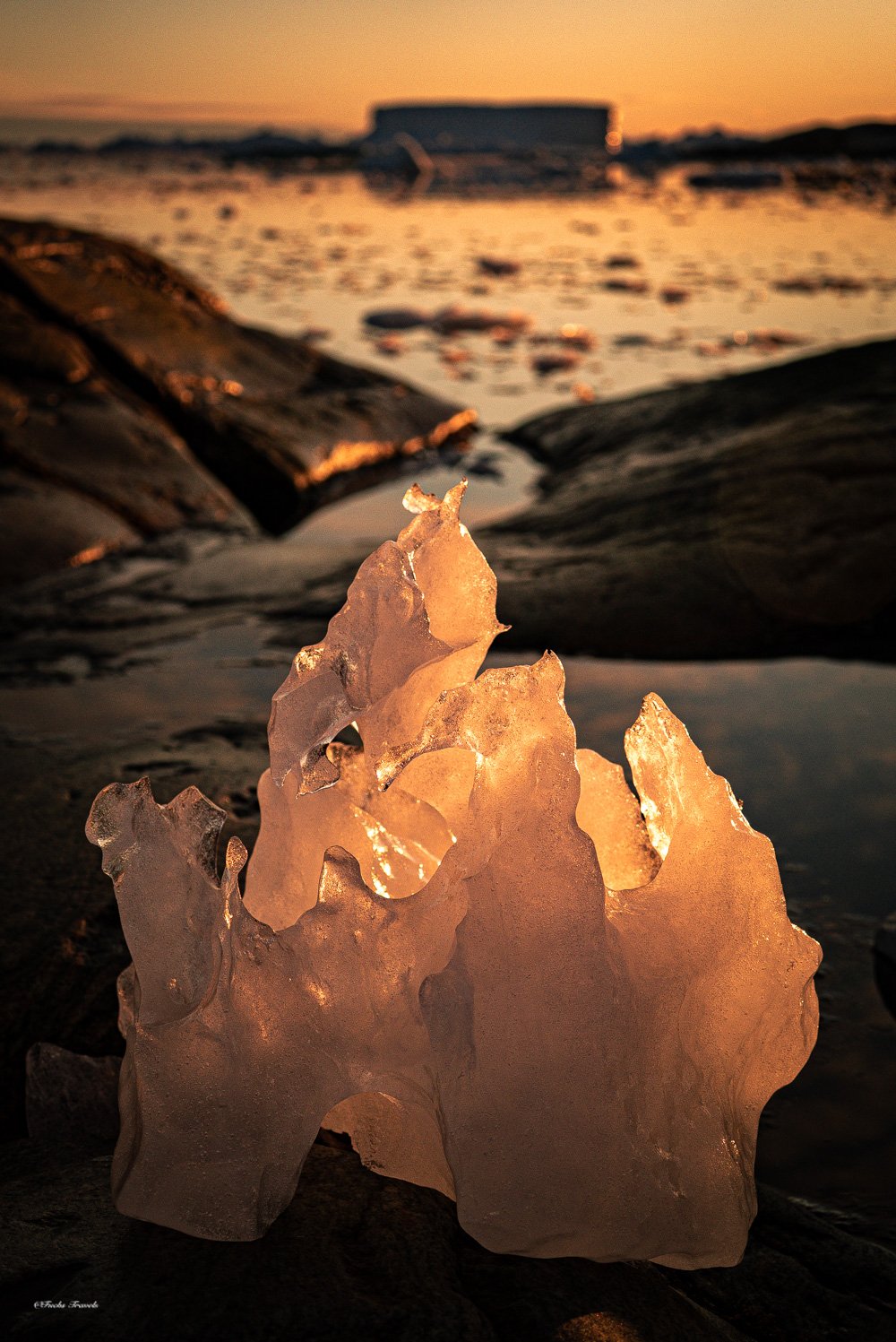
Photo: Amin Ghadersohi
- Use a 70-200mm or 100-400mm lens to isolate ice details from a safe distance when shooting from a boat.
- On shore, a 24-70mm or even a macro lens captures the intimate textures of smaller ice fragments.
- Backlight reveals translucency. Position yourself so the sun is behind or beside the ice, and the interior structure glows.
- Polarizing filters cut surface glare on wet ice, revealing the blue depth beneath. Rotate the polarizer while looking through the viewfinder to find the angle of maximum effect.
Greenlandic Sled Dogs and Cultural Subjects
Greenland is home to approximately 15,000 sled dogs, a working breed that has been essential to Inuit culture for thousands of years. In Ilulissat, sled dogs are everywhere: chained in groups on the hillsides above town, resting in packs near the harbor, or being trained by their mushers along the coastal trails.
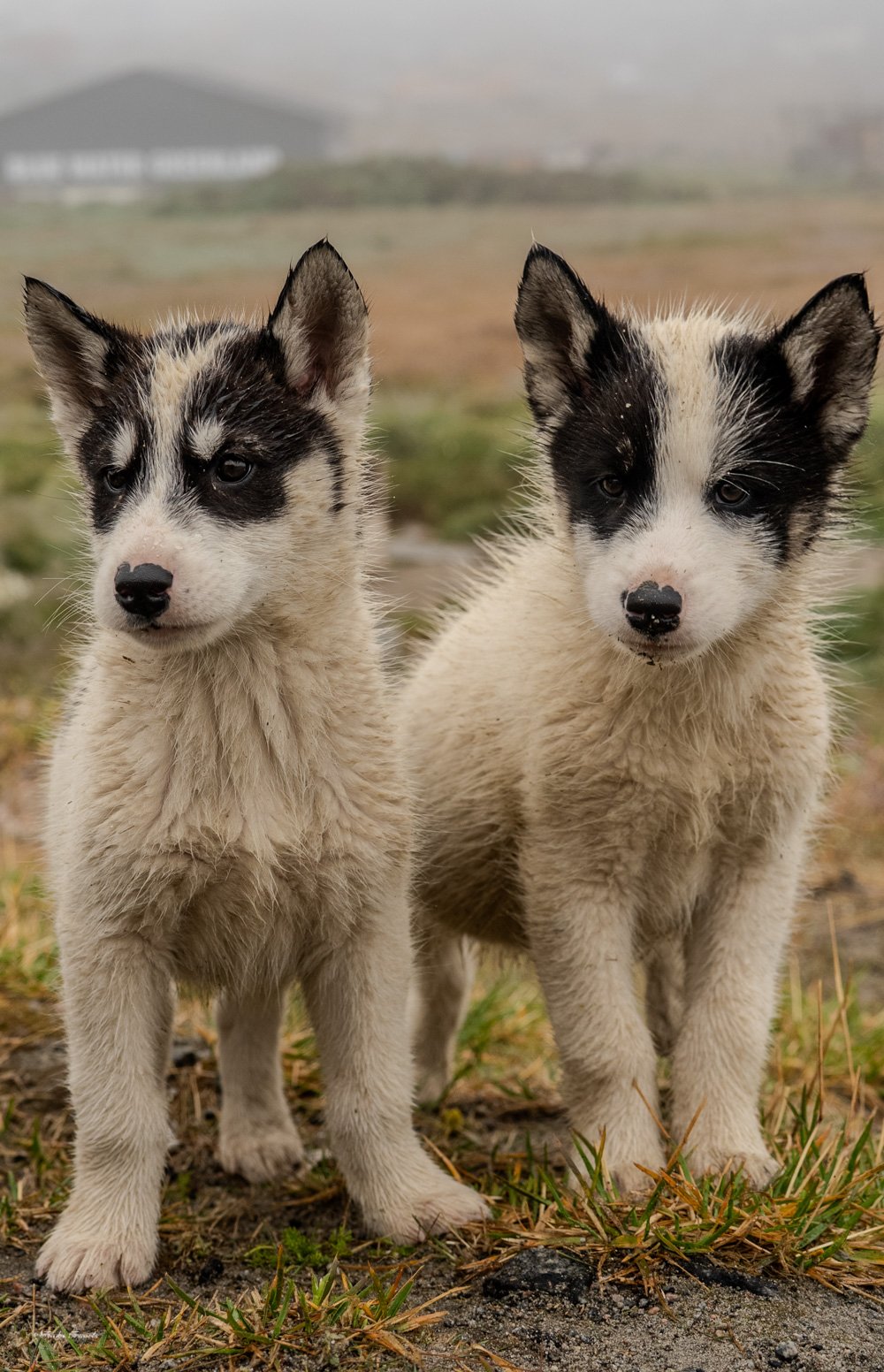
Photo: Amin Ghadersohi
Photographing Sled Dogs Ethically
- Do not approach chained dogs without the owner’s permission. Greenlandic sled dogs are working animals, not pets. They can be territorial and are not socialized to strangers the way domestic dogs are.
- Use a telephoto lens (70-200mm or longer) to photograph dogs from a respectful distance. This also compresses the background, isolating the dogs against the tundra or mountains.
- Puppies are more approachable and make compelling subjects, particularly when photographed with the Greenlandic landscape as context. Puppy season is spring and early summer.
- Sled dog tours operate in winter (November through April) and provide the best opportunity for action photography: teams pulling sleds across sea ice with icebergs as backdrop.
The Town of Ilulissat
Ilulissat itself provides cultural photography opportunities. Colorful wooden houses painted in traditional Greenlandic reds, yellows, and blues cluster on rocky hillsides above the harbor. The Zion Church (built 1779) is one of Greenland’s oldest buildings. The harbor, active with fishing boats and tour vessels, provides foreground interest for compositions looking back toward the icefjord.
Drone Photography in Greenland
Disko Bay is one of the most extraordinary drone photography locations on Earth. The aerial perspective transforms icebergs from white shapes floating in water into complex three-dimensional sculptures surrounded by turquoise meltwater, dark ocean, and the shadows of their own submerged mass.
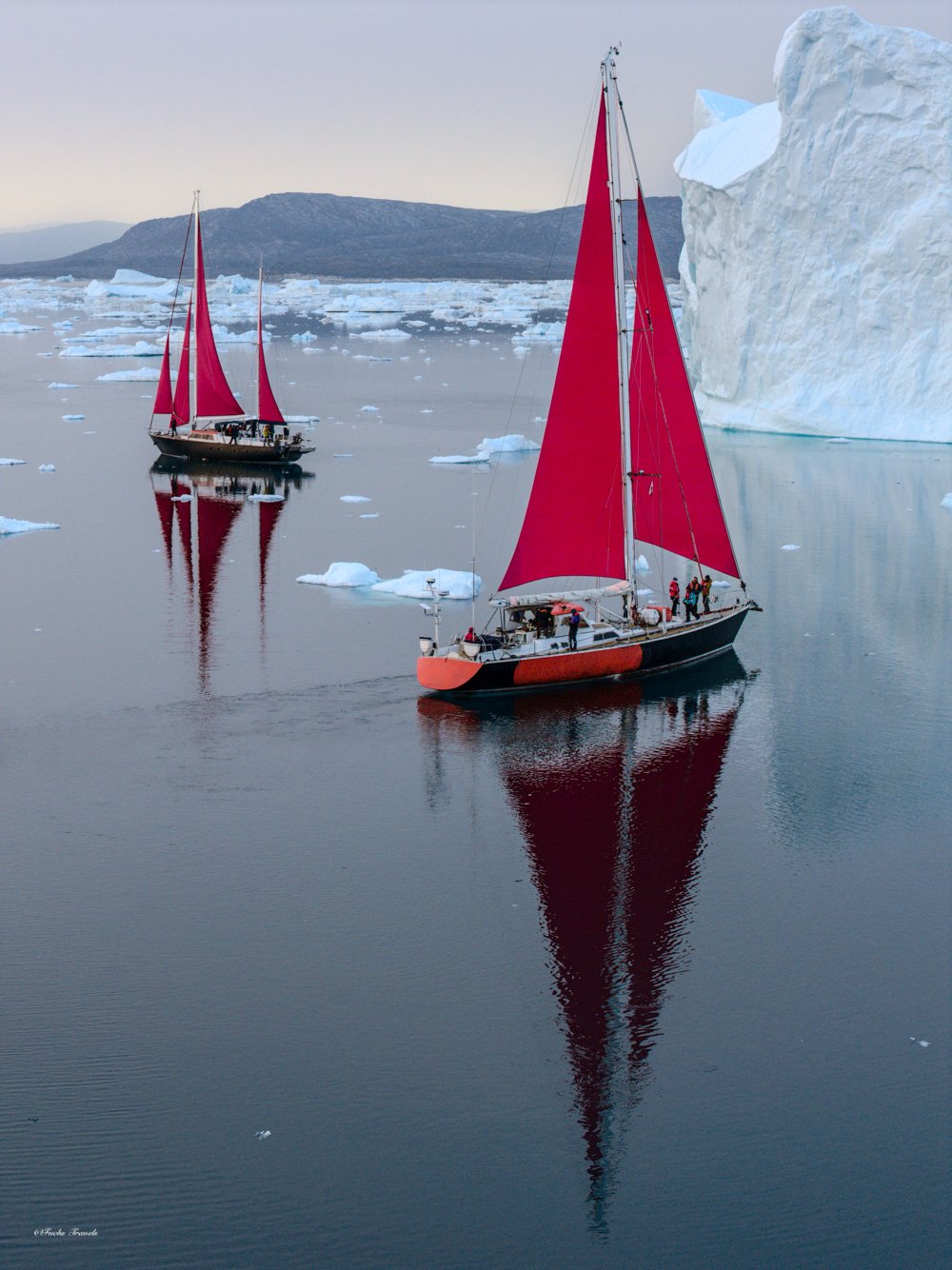
Photo: Amin Ghadersohi
Drone Altitude Strategy
The altitude you choose determines the character of the photograph. Each zone produces a fundamentally different image.
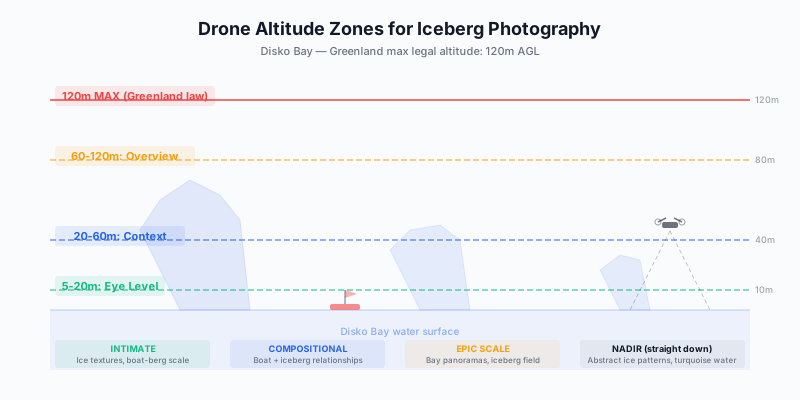
| Altitude |
Character |
Best For |
| 5-20m |
Intimate, eye-level with the ice |
Ice texture, boat-berg scale relationships, dramatic close perspectives |
| 20-60m |
Contextual, reveals spatial relationships |
Boat among icebergs, composition of multiple elements, shadows visible |
| 60-120m |
Overview, reveals the full field |
Iceberg patterns across the bay, abstract compositions, scale of the ice field |
| Nadir (straight down) |
Abstract, pattern-focused |
Turquoise water patterns, ice shapes from above, submerged ice visible |
Greenland Drone Regulations
Greenland follows Danish aviation authority (Trafikstyrelsen) regulations with additional local considerations.
- Registration: Required for all drones with cameras, regardless of weight. Register through the Danish drone register before arrival.
- Maximum altitude: 120 meters above ground/water level.
- VLOS: Visual line of sight required at all times.
- Distance from people: 150 meters horizontal from uninvolved persons for drones over 250 grams.
- Ilulissat Icefjord UNESCO site: Drone flights within the UNESCO-designated zone require specific permission from the municipality. The town of Ilulissat itself is generally accessible for drone flights following standard Danish rules, but the icefjord trail area has restrictions during peak tourist hours.
- Wildlife distance: Maintain at least 300 meters from marine mammals (whales, seals) and 150 meters from nesting bird colonies.
- The DJI Mini 4 Pro advantage: At 249 grams, the Mini 4 Pro falls under lighter regulation in Denmark and Greenland. However, the sub-250g weight is a serious liability in Greenland’s coastal winds. The Mavic 4 Pro’s heavier mass and Level 6 wind resistance make it the better choice for serious iceberg work.
Practical Drone Considerations
- Cold batteries: Even in summer, temperatures near the icebergs drop to 2-8C. Battery performance decreases by 15-25%. Carry four batteries minimum and warm spares inside your jacket.
- Wind: Coastal winds in Disko Bay are unpredictable and can gust to 40+ km/h without warning. Check UAV Forecast and Windy.com before every flight. If sustained winds exceed 25 km/h, keep the Mavic 4 Pro below 60 meters where ground effect provides some stability.
- Magnetic interference: Large concentrations of iron-bearing rock along the Greenland coast can affect compass calibration. Calibrate the drone’s compass at each new launch site, away from metal objects and vehicles.
- Return-to-home over water: When flying from a boat, disable automatic return-to-home. The boat will have moved from the takeoff point. Instead, set RTH altitude high and manually guide the drone back.
The Aleqa Ittuk and Expedition Vessels
Several expedition-class vessels operate in Disko Bay during the summer season. The Aleqa Ittuk, a passenger ferry operating in the region, can navigate through the ice field alongside sailing vessels, reaching areas closer to the glacier front where the most recently calved bergs display the deepest blue coloring.
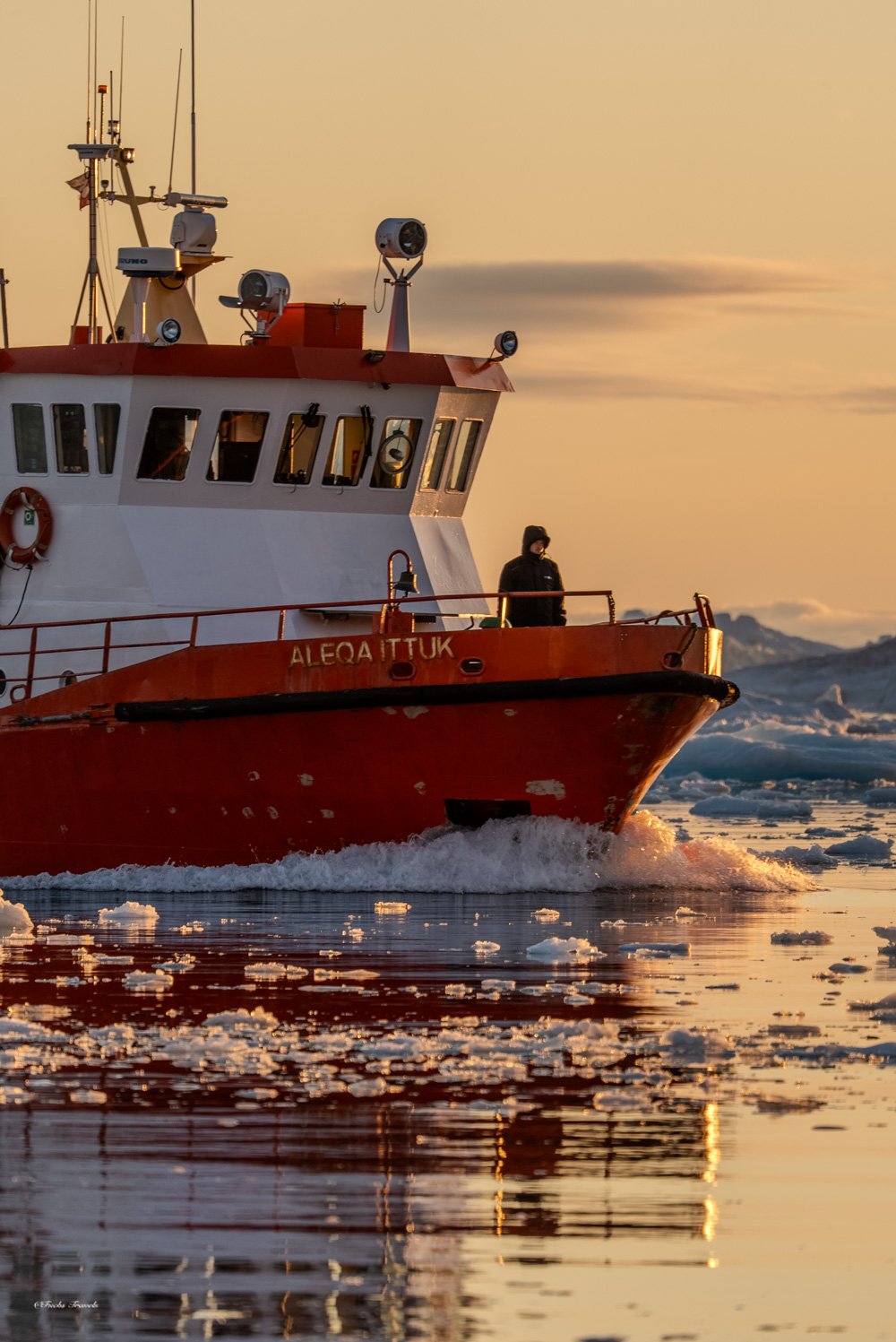
Photo: Amin Ghadersohi
Multi-day expedition cruises provide extended access to the ice field, including overnight anchorages among the bergs where you can shoot midnight sun compositions from the deck. The photography advantage over day trips is substantial: you see the ice in every light condition, you can return to specific bergs as the light changes, and you develop an intuitive understanding of the ice field’s behavior over days rather than hours.
Practical Logistics
Getting to Ilulissat
There is no road to Ilulissat. Access is by air only.
- From Copenhagen: Air Greenland operates direct flights to Kangerlussuaq (4.5 hours), with connecting flights to Ilulissat (45 minutes). Some seasonal direct flights to Ilulissat are available.
- From Reykjavik: Icelandair and Air Greenland offer seasonal connections via Nuuk or Kangerlussuaq.
- Domestic: Air Greenland connects Ilulissat to Nuuk, Kangerlussuaq, and smaller Greenlandic settlements. Flights are weather-dependent and cancellations are common. Build buffer days into your itinerary.
Accommodation
Ilulissat offers limited but adequate accommodation.
| Option |
Type |
Price Range |
Notes |
| Hotel Arctic |
4-star hotel |
$$$$ |
Best in town, icefjord views from some rooms |
| Hotel Icefiord |
3-star hotel |
$$$ |
Central location, harbor views |
| Ilulissat Guesthouse |
Budget rooms |
$$ |
Basic, clean, functional |
| Airbnb/apartments |
Self-catering |
$$-$$$ |
Limited availability, book months ahead |
Book accommodation three to six months in advance for June through August. Ilulissat’s hotel capacity is limited and demand during peak season exceeds supply.
Best Time to Visit
| Period |
Primary Subject |
Light |
Conditions |
| Late May - June |
Icebergs + midnight sun |
24hr daylight, low sun |
Cool (2-8C), boat tours beginning |
| July |
Peak iceberg + midnight sun |
24hr daylight |
Warmest (5-12C), peak tourism |
| August |
Icebergs + growing sunset |
Defined golden hour returns |
Warm (3-10C), excellent conditions |
| September |
Icebergs + aurora possible |
Dark skies return, dramatic sunsets |
Cool (0-6C), fewer tourists |
| February - March |
Frozen icefjord + aurora + sled dogs |
Low polar light, aurora |
Cold (-15 to -5C), sled dog tours |
The recommendation for dedicated photography: Late June or August. June gives you midnight sun at its peak with active icebergs. August gives you the return of defined golden hours and sunsets, longer blue hours, and the beginning of dramatic autumn light. Both months have active boat tours and comfortable working temperatures.
What It Costs
Greenland is expensive. The isolation, limited infrastructure, and short tourist season drive prices well above Scandinavian levels.
| Expense |
Approximate Cost |
| Return flights (Copenhagen-Ilulissat) |
$800-1,400 USD |
| Hotel (per night) |
$200-450 USD |
| Multi-day sailing trip (3-5 days) |
$2,500-5,000 USD |
| Day boat tour to icebergs |
$150-300 USD |
| Meals (per day) |
$60-100 USD |
| Drone registration |
~$20 USD |
Budget approximately $5,000-8,000 USD for a 7-day photography-focused trip including flights, accommodation, and boat access. This is not a budget destination. The cost is the price of admission to one of the most photogenic landscapes on Earth.
Gear Recommendations for Greenland
Camera Bodies
The Arctic environment demands reliable, weather-sealed bodies with strong dynamic range. You will encounter extreme contrast (bright ice against dark water), rapid temperature changes (warm cabin to cold deck), and moisture from spray and fog.
- Sony A1 II or A7R V: High dynamic range, excellent weather sealing, reliable cold-weather battery performance with NP-FZ100 batteries.
- Nikon Z8: Exceptional dynamic range, strong in cold conditions, EN-EL15c batteries perform well below freezing.
- Hasselblad X2D II: If you own medium format, the 100MP sensor captures ice texture detail that is visible in large prints. The tonal gradation advantage of the larger sensor is particularly evident in ice blues and white-on-white compositions.
Lens Kit
| Lens |
Use in Greenland |
| 14-24mm f/2.8 |
Wide icefjord panoramas, midnight sun compositions, aurora (if visiting Sep-Mar) |
| 24-70mm f/2.8 |
Workhorse: boat compositions, town scenes, medium-distance bergs |
| 70-200mm f/2.8 |
Iceberg isolation, sled dogs, ice details from boat, compressed compositions |
| 100-400mm (optional) |
Distant calving events, wildlife, ice detail abstraction |
The 70-200mm is the most-used lens in Greenland. From a boat, the icebergs are typically 100-500 meters away, and the telephoto compression that makes a sailboat look tiny against a towering berg requires focal lengths above 100mm.
Protection and Accessories
- Weather sealing: Non-negotiable. Salt spray, fog moisture, and rapid temperature changes will test your gear.
- Silica gel packets: Pack them in your camera bag. The moisture cycling between cold exteriors and warm interiors promotes internal condensation.
- Polarizing filter: Cuts surface glare on water, reveals the turquoise and teal tones in glacial meltwater, and deepens the blue of dense ice. This is the single most useful filter in Greenland.
- ND filters (6-stop, 10-stop): For long exposure work from shore: smoothing water around grounded bergs, creating cloud motion effects.
- Rain sleeves: Zodiac tours generate significant spray. Protect your camera even when the sky is clear.
- Microfiber cloths: Pack at least ten. Salt spray on the front element is a constant battle on boat excursions.
Drone Kit
- Mavic 4 Pro: Primary aerial camera. The 4/3-inch Hasselblad sensor produces files that match the quality standard of your ground work. The variable aperture (f/2.0-f/11) handles the extreme brightness of ice without ND filters in most conditions.
- Mini 4 Pro: Backup and lighter-regulation option. Less stable in wind but provides redundancy if the primary drone fails or is damaged.
- ND filters for drone: ND8 and ND16 for video work. For stills, the Mavic 4 Pro’s f/11 aperture typically suffices.
- Four batteries per drone: Budget for 25-30% capacity loss in cold conditions.
Exercises: Preparing for Greenland
Exercise 1: The Ice Exposure Drill
Find a scene with a dominant white subject: snow, white sand, or a white building in bright light. Shoot it at your camera’s default metering, then at +1.0, +1.3, and +1.7 EV compensation. Review all four images at 100% zoom, paying attention to highlight detail retention and overall tonality. Determine the maximum compensation your camera allows before clipping highlights. This knowledge directly applies to ice photography.
Exercise 2: The Telephoto Compression Study
Using a 70-200mm lens, photograph a small foreground object (a person, a vehicle, a boat) against a large background object (a building, a mountain). Shoot at 70mm, 100mm, 135mm, and 200mm, adjusting your position to maintain the foreground subject at the same size in the frame. Study how each focal length changes the apparent size relationship between foreground and background. This is the exact skill you will use to make sailboats appear dwarfed by icebergs.
Exercise 3: The Fog White Balance Test
On a foggy day, photograph the same scene at 4000K, 5200K, 6500K, and 8000K. Study how each setting transforms the mood. At 4000K, fog turns blue and cold. At 8000K, fog turns warm and inviting. Neither is wrong. The exercise builds your instinct for choosing the white balance that serves the mood of each specific composition.
Exercise 4: The Over-Water Drone Return
Practice flying your drone over a body of water and returning it to a moving platform. Use a friend’s boat, a kayak, or simply have someone hold a landing pad while walking. The key skill: maintaining visual contact with the drone while monitoring the controller screen, judging distance over featureless water, and landing precisely. In Greenland, you will need this skill when flying from a moving vessel among icebergs.
Conclusion
Greenland does not give up its photographs easily. The logistics are complex, the costs are significant, the weather is unpredictable, and the ice, the very subject you came to photograph, operates on a timescale and at a scale that dwarfs human planning. Icebergs roll when they choose, fog arrives without warning, and the midnight sun can lull you into a disoriented haze of endless golden light where you lose track of time, meals, and sleep.
But the photographers who navigate these challenges and put themselves on the water among the bergs, who wait for the light to rake across a wall of compressed blue ice, who launch a drone above the turquoise channels between cathedral-sized icebergs, they return with images that belong to a different category of landscape photography. These are not pretty pictures of a cold place. They are records of a planet in motion, of ice shaped by forces older than human civilization, and of light performing at the edge of the world in ways that no other latitude can replicate.
Plan thoroughly. Book early. Bring enough batteries, enough storage, and enough patience to outlast the weather. The ice will be there. It has been calving from Sermeq Kujalleq for 250,000 years. Your only job is to be ready when the light and the ice align.